Table of Contents
Wildfires move fast, change direction quickly, and create conditions that are difficult to predict. For homeowners evaluating fire shelters, one of the most common questions is simple: how effective are fire shelters, really?
It’s not a simple yes-or-no answer.
Some homeowners are exploring on-site refuge options—especially in areas with limited evacuation routes or fast-moving fire conditions. At the same time, there’s a lot of skepticism. People worry about heat, air supply, and whether a shelter would actually protect them in a real wildfire.
This guide breaks down what “fire shelter effectiveness” actually means in practical terms. We’ll look at how shelters are tested, where they perform well, where they can fall short, and how to evaluate them as part of a broader wildfire preparedness strategy.
Evacuation is always the priority. But understanding how shelters function can help you make more informed decisions about your overall plan.
In Short
Fire shelter effectiveness isn’t defined by a single feature or rating. It depends on how well a structure manages heat, blocks smoke and gases, and maintains breathable air for a defined period.
Testing provides useful benchmarks, but real-world performance depends heavily on placement, surrounding conditions, and how the shelter is used.
For homeowners, the key is context. A shelter is not a standalone solution—it works as part of a layered approach that includes defensible space, home hardening, and a clear evacuation plan. When those pieces work together, a shelter can add another level of protection in situations where options become limited.
What Effective Means
When people talk about fire shelter effectiveness, they are often thinking in general terms.
“Will it protect me during a wildfire?”
In reality, effectiveness is defined by how well a structure performs against three specific threats:
- Radiant heat
- Direct flame contact
- Convective heat (hot gases and wind-driven heat)
Wildfires are complex. In many cases, homes don’t ignite from direct flames—they ignite from heat and embers. A shelter’s role is to reduce and delay that exposure long enough for conditions outside to pass.
That distinction matters.
No shelter eliminates heat entirely. Instead, performance is measured by:
- How much heat is reduced or slowed
- How long internal conditions remain survivable
- Whether occupants are protected from smoke, gases, and oxygen depletion
Effectiveness is not a single number. It’s the result of materials, sealing, insulation, air systems, and time working together.
Testing: Lab vs. Field
Fire shelters are typically evaluated using controlled testing standards such as ASTM or ULC. These tests simulate heat exposure, flame contact, and structural stress under repeatable conditions.
That consistency is useful. It allows for comparison.
But it’s important to understand the gap between testing and reality.
In a lab:
- Heat levels are controlled
- Exposure duration is defined
- Variables like wind and debris are limited
In a real wildfire:
- Wind shifts rapidly
- Fire behavior changes direction
- Structures and vegetation create unpredictable heat patterns
This is why test results should be viewed as performance indicators, not guarantees.
For homeowners evaluating options—including purpose-built systems like the FORT®—the goal is to understand:
- What conditions the fire shelter was tested under
- How long it maintained survivable conditions
- Whether testing included internal environment monitoring (not just structural integrity)
That context is what makes testing meaningful. For example, the FORT has undergone both lab and field testing, including simulated wildfire environments and monitored internal conditions during exposure. Testing has included both remote monitoring and human occupancy scenarios, along with evaluation against established construction fire standards such as ASTM and ULC. This type of combined testing approach helps provide a more complete picture of how a system may perform under real-world conditions.
Air Systems & Occupancy
One of the biggest concerns people have about fire shelters is simple: “Will I be able to breathe?” And it’s a valid concern.
During a wildfire, the outside environment can quickly become dangerous to inhale. Air conditions may include:
- Reduced oxygen levels - As fire consumes available oxygen, concentrations can drop, making it harder to breathe and increasing fatigue or confusion.
- Carbon monoxide - A colorless, odorless gas produced by incomplete combustion that can be deadly even at relatively low concentrations.
- Elevated CO2 levels - As people breathe in a confined space, carbon dioxide builds up over time, which can lead to dizziness, shortness of breath, and loss of consciousness if not properly managed.
- Fine particulate smoke - Tiny airborne particles that can irritate lungs, reduce visibility, and make breathing increasingly difficult.
A shelter that manages heat but does not address air quality is not truly effective. That’s why air systems are a critical part of overall performance, not just a secondary feature.
When evaluating a shelter, pay close attention to how the system handles breathable air over time:
- How breathable air is supplied - Is the system using stored compressed air, filtration, or passive airflow? Each approach has different limitations and durations.
- How CO2 buildup is managed - Effective systems account for rising carbon dioxide levels and include methods to control or limit accumulation inside the shelter.
- How long the system is designed to operate - Look for clearly defined duration limits based on testing—not assumptions or ideal conditions.
- How many occupants the shelter supports - Air supply and internal conditions change significantly depending on how many people are inside.
Together, these factors define what’s often called the occupancy window which is the period during which conditions inside the shelter remain survivable.
Systems like the FORT are designed with controlled air environments and defined occupancy limits (up to 8 people for 4 hours), helping set clear expectations for real-world use.
Without that clarity, it’s easy to overestimate how long a shelter can safely support occupants, especially under stressful, fast-changing wildfire conditions.
Materials & Construction
Materials play a major role in how a shelter performs under extreme heat. Most fire shelter designs rely on a combination of:
- Insulated layers to slow heat transfer - Multi-layer construction helps reduce how quickly external heat moves into the interior, buying critical time during peak exposure.
- Fire-resistant outer materials - Exterior surfaces are designed to withstand direct flame contact, radiant heat, and burning debris without failing.
- Sealed construction - Tight seals help prevent smoke, gases, and superheated air from entering the interior environment.
But materials alone aren’t enough. In real-world conditions, performance often comes down to how those materials are assembled and how the system holds up under stress.
Construction details are where performance is often won or lost:
- Door seals and entry systems - Entry points are the most vulnerable areas. Even small gaps or heat transfer at the door can allow smoke or extreme temperatures to enter.
- Joints and seams - Connections between panels must remain sealed under heat and pressure. Weak seams can become failure points during prolonged exposure.
- Structural stability - The shelter must remain intact under wind, falling debris, and nearby structural fire activity—not just direct flame contact.
Doors, in particular, are one of the most critical components. A poorly designed or improperly sealed door can compromise the entire system, regardless of how strong the surrounding materials are.
This is where some systems differentiate themselves. The FORT® incorporates a layered, engineered construction designed to manage heat transfer, along with a proprietary double-door entry system that has been tested under high-temperature conditions. These types of integrated design features help address not just material performance, but how the structure functions as a complete, sealed environment during a wildfire event.
For homeowners, this is where real-world evaluation matters. It’s not just what materials are used. It’s also how the entire system performs together under realistic conditions.
Fire shelter video demo
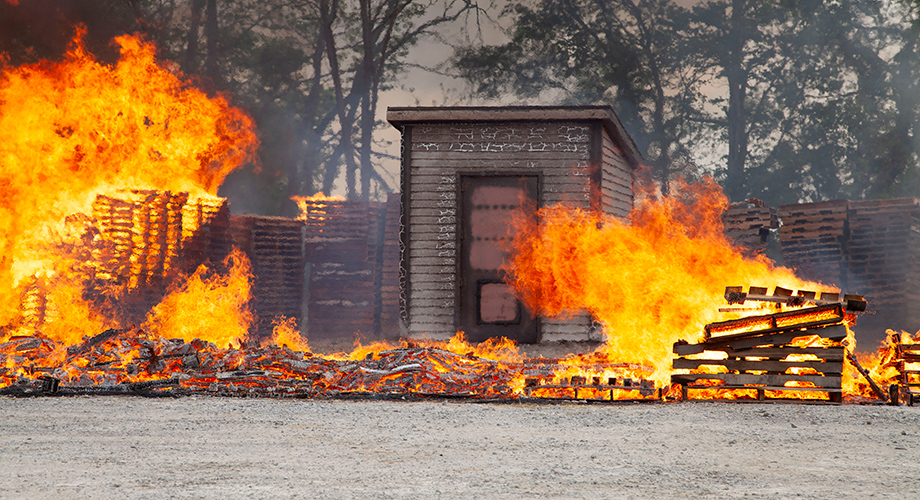
To understand how the materials work under wildfire conditions, a fire shelter video showing a demo can be helpful. But they can also be misleading if you don't know what to look for.
Pay attention to whether the demonstration answers key performance questions:
- Are internal temperatures measured? Exterior flames can look dramatic, but what matters most is how conditions are managed inside the shelter.
- Are door systems tested under heat? Entry points are often the most vulnerable areas, so it’s critical to see how seals and materials perform during exposure.
- Is the exposure duration realistic? Short bursts of fire don’t reflect real wildfire conditions, where heat and smoke can persist over time.
A short clip of flames hitting a structure doesn’t tell the full story.
For example, this fire shelter test video provides a closer look at how the system performs during simulated wildfire conditions, including real exposure scenarios.
Failure Modes & Misuse
In real-world wildfire scenarios, performance is influenced just as much by conditions and use as it is by design.
Some of the most common issues include:
- Improper siting - Placement too close to structures, fencing, or vegetation can significantly increase heat exposure and ignition risk. Clearance and surrounding conditions play a direct role in how much stress the shelter must withstand.
- Delayed entry - Waiting too long to enter can reduce the available protection window. As external temperatures and smoke conditions intensify, the ability to safely enter and stabilize the interior environment becomes more limited.
- Over-occupancy - Exceeding the intended number of occupants can accelerate heat buildup and impact air quality, shortening the period during which conditions remain survivable.
- Lack of maintenance - Seals, doors, and system components require regular inspection. Even small issues—such as degraded seals or unserviced air systems—can affect overall performance under stress.
These factors are often overlooked, but they directly influence outcomes.
In many cases, issues arise not because the shelter failed structurally, but because it was used outside of its intended conditions or without proper preparation. Performance depends on the entire system—design, placement, maintenance, and timing—working together as planned.
To help address these variables, systems like the FORT include site evaluation and ongoing support to guide proper placement, setup, and maintenance—helping homeowners reduce the risk of these common issues before they become critical.
Site Conditions (Zone 0)
Where and how a shelter is installed can significantly influence its effectiveness.
One of the most important concepts is Zone 0, the area within approximately five feet of a structure. This zone should be kept clear of combustible materials to reduce ignition risk.
Clearance from vegetation, distance from nearby structures, and ground conditions all play a role in performance. Non-combustible surfaces such as gravel or concrete can reduce ignition potential, while slope and wind exposure can influence how fire behaves in the immediate area.
These factors do not eliminate risk, but they can improve how a shelter performs when exposed to wildfire conditions.
Reading Claims & Certifications
Marketing language around fire shelters can be confusing, especially since terms like “fire-resistant” or “high-performance” are not always standardized. As a result, it’s important to look beyond general descriptions and focus on verifiable details.
One of the most reliable indicators of performance is third-party testing. Standards such as ASTM or ULC provide structured methods for evaluating how materials and designs perform under heat exposure. Along with the presence of testing, homeowners should review the documented conditions of those tests, including temperature levels, exposure duration, and the type of heat or flame simulation used. Clear limitations are equally important, such as how many occupants the shelter is designed for, how long it is intended to perform, and any specific installation requirements that may affect outcomes.
At the same time, it’s worth approaching certain claims with caution. Products that do not provide supporting data, rely heavily on demonstrations without context, or use broad terms like “fireproof” without technical backing should be evaluated carefully. A credible product will clearly explain what it is designed to do in a way that helps homeowners make informed decisions.
Shelter Types & Uses
Fire shelters are often described using different terms—such as “fire shelter,” “home fire shelter,” or “wildfire bunker.” These labels aren’t always standardized, and they’re often used interchangeably depending on the context.
What matters more than the name is how the system is designed to perform.
Some solutions are lightweight and portable, intended for short-duration emergency use. Others are fixed structures installed on residential properties, designed to provide a more controlled environment. More advanced systems incorporate engineered construction, air management, and defined occupancy durations to support occupants through more sustained wildfire exposure.
The key differences come down to duration, air management, structural design, and intended use, not the label itself.
For homeowners, the goal isn’t to compare terminology. It’s to understand how a specific solution fits into a broader wildfire preparedness plan, alongside defensible space, home hardening, and evacuation planning.
Systems like the FORT are designed as fixed, residential wildfire refuge structures with defined occupancy, integrated air systems, and engineered construction, combining elements often associated with both “home fire shelters” and “wildfire bunkers.”
The FORT
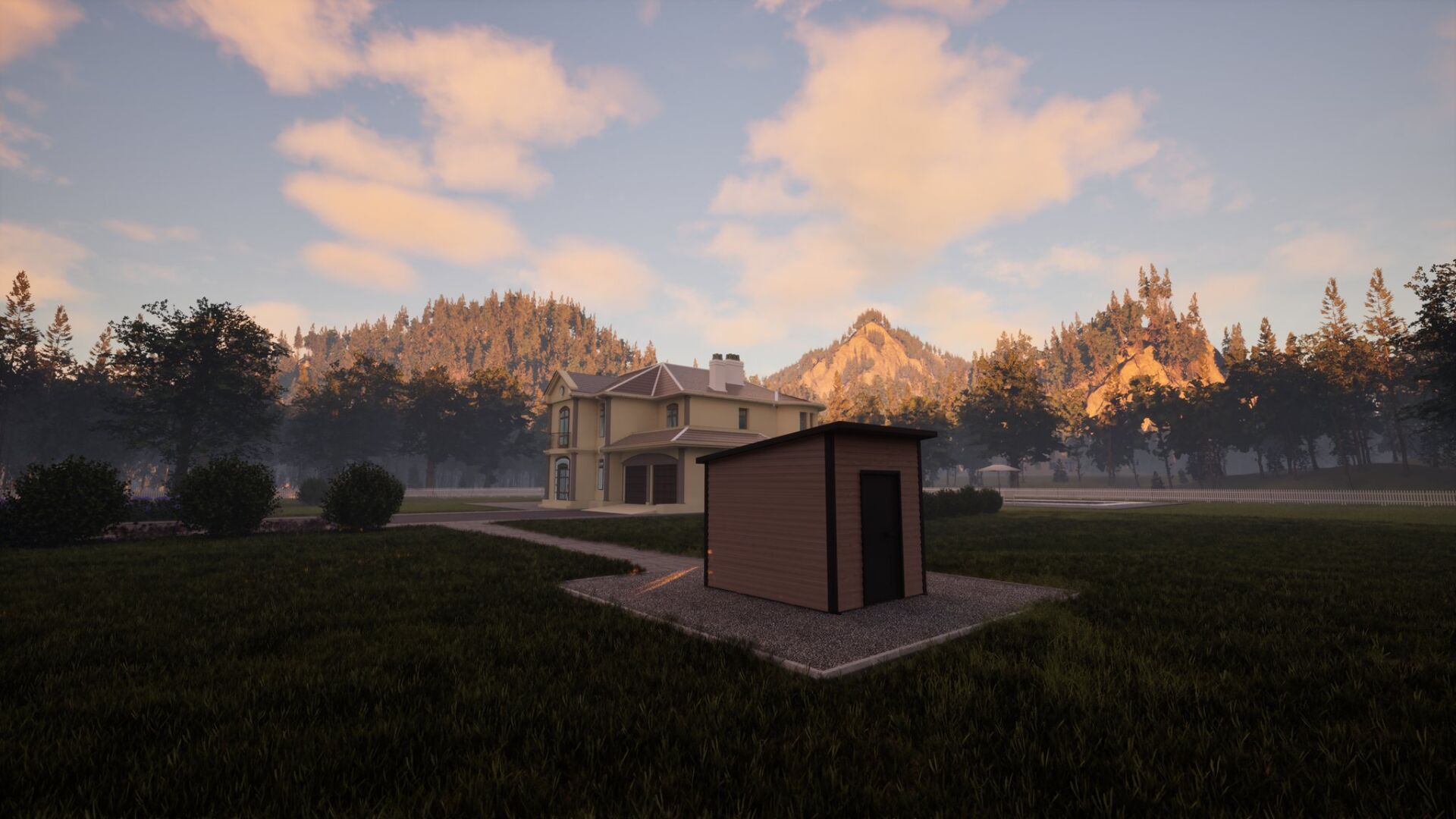
Wildfire safety is not a single decision. It's a system. Preparation can include defensible space, home hardening, evacuation planning, and real-time monitoring and alerts.
Within that framework, some homeowners also choose to incorporate the FORT as an additional on-site protection measure.
The FORT® is designed as a fire-resistant refuge structure that integrates insulated construction to manage heat exposure, sealed systems that help limit smoke and gas intrusion, and air management systems that support breathable conditions for a defined period. These elements work together to create a controlled interior environment during periods of extreme exposure.
It may also be incorporated into preparedness planning proactively for storing essential items or materials that are difficult to move quickly, allowing homeowners to think beyond immediate evacuation logistics.
For properties with limited evacuation routes, large estates, or higher risk exposure, this type of system becomes part of planning, not a replacement for it.
Explore The FORT
FAQs
Fire shelter effectiveness refers to how well a shelter reduces heat exposure, blocks flames and gases, and maintains breathable air for a limited period. It is typically measured through testing and influenced by real-world factors like placement and duration. Systems like the FORT are designed to address all three elements together—heat management, sealed construction, and controlled air systems—so performance is evaluated as a complete environment rather than a single feature.
The duration a fire shelter can protect occupants depends on its design, air system, and intended use. Some portable shelters used by firefighters are designed for very short-duration exposure (often measured in minutes) while more advanced, fixed systems are engineered for longer, defined occupancy periods.
For example, the FORT is designed to provide a controlled internal environment with breathable air for approximately four hours for its intended occupancy of up to 8. This duration is based on engineered air systems that maintain oxygen levels and manage carbon dioxide buildup within defined limits.
It’s important to understand that this timeframe is not meant to “outlast” a wildfire, but to provide a survivable window during peak fire exposure. Actual duration and performance can vary depending on conditions such as fire intensity, surrounding fuels, and how the shelter is used.
Fire shelters can be a valuable part of a broader wildfire safety plan when used appropriately. They should always be considered alongside evacuation planning, defensible space, and home hardening. Systems like the FORT are specifically designed for residential use, providing a controlled refuge option that can be incorporated into a layered preparedness strategy, rather than replacing evacuation as the primary response.
Fire shelters are typically designed for wildfire exposure scenarios, while survival shelters may be built for a wider range of emergency situations. In practice, the terminology is often used interchangeably. What matters more is how the system is engineered, particularly in terms of heat resistance, air management, and duration. The FORT combines features commonly associated with both categories, functioning as a residential wildfire refuge structure with defined performance capabilities.
Yes. Regular maintenance is essential to ensure that seals, doors, and air systems function properly when needed. Even small issues can impact performance under extreme conditions. The FORT includes scheduled inspection requirements and system checks to help ensure it remains fully operational and ready for use as part of an ongoing wildfire preparedness plan.
Final Thoughts
Fire shelter effectiveness is not about a single feature or claim. It is the result of multiple systems working together, including materials, construction, air management, placement, and how the shelter is used in real conditions.
For homeowners, the most important step is understanding how all of these elements fit into a larger wildfire preparedness plan. A shelter should never be viewed in isolation. Its performance is directly tied to defensible space, home hardening, and the decisions made before and during an emergency.
Evacuation remains the priority and should always be the first plan. However, for those evaluating additional layers of protection, taking the time to understand how shelters actually perform, what they are designed to do, and where they fit within a broader strategy can lead to more informed and confident decisions.