Table of Contents
Wildfire-resistant siding for luxury homes comes down to 4 decisions: material classification, full wall assembly rating, joint and transition detailing, and whether the finish matches the design intent of the property. Get all 4 right and you have a facade that genuinely reduces ignition risk. Miss any one of them and the rating on the spec sheet doesn't hold up when it matters.
Siding is the largest continuous surface on most homes and one of the most exposed. When embers land on it, when radiant heat builds against it, when flames make direct contact, the material and the detailing around it either perform or they don't.
This guide covers the materials and assemblies that perform best in wildfire-prone areas, the ratings that actually matter, and the detailing that keeps embers out at the edges. Evacuation remains the safest option when conditions deteriorate and local authorities issue orders. Siding selection is part of the preparation that happens long before that moment.
In Short
Fire resistant siding selection for luxury homes comes down to 4 factors: material classification, fire rating of the full wall assembly (not just the panel), how the joints and transitions are detailed, and whether the material can be specified in finishes that match the design intent of the property. Fiber cement, stucco, metal cladding, and stone veneer all perform well when properly installed. Untreated wood, vinyl, and lap siding with open joints do not perform comparably under wildfire exposure conditions.
The FORT® is designed to work alongside home hardening as part of a layered wildfire protection plan. A well-clad home with proper ember-resistant detailing reduces the likelihood of ignition. An on-site refuge option within that broader strategy addresses what happens when conditions exceed what the structure alone can handle.
Non-Combustible vs. Ignition-Resistant: What the Distinction Actually Means
Non-combustible and ignition-resistant are 2 terms that come up constantly in discussions about wildfire-resistant siding, and the difference between them matters more than most people in the WUI realize. Choosing the wrong category isn't just a code issue — it affects how the building actually performs under fire exposure.
Non-Combustible
Non-combustible materials won't sustain a flame on their own and don't contribute to fire spread regardless of exposure duration. Materials in this category include:
- Concrete and masonry
- Steel and aluminum
- Fiber cement
- Stucco (hard-coat)
- Natural and manufactured stone veneer
Ignition-Resistant
Ignition-resistant materials are typically treated or engineered wood products that resist ignition under specific test conditions but can still burn under sufficient heat or prolonged direct flame exposure. The classification is defined under International Wildland-Urban Interface Code (IWUIC) Section 503 and California Title 24 building standards.
Why It Matters for High-Value Properties
Ignition-resistant wood siding may satisfy local code requirements and may even carry a Class A fire rating. "Resists ignition under test conditions" and "won't contribute to fire spread" are different promises, and for a high-value property, that gap is worth taking seriously.
Local requirements vary significantly by jurisdiction. The right starting point is always your Authority Having Jurisdiction (AHJ), not just the product spec sheet. Key regulatory frameworks to know:
- California Title 24 — California's building standards code, which includes wildfire-related construction requirements for high fire hazard severity zones
- International Wildland-Urban Interface Code (IWUIC) — the model code governing construction in WUI zones, adopted with local amendments in many states
- NFPA 1 Fire Code — the National Fire Protection Association's fire code, which includes exterior finish and material requirements
The Main Material Options for High-Risk Properties
The 4 non-combustible siding materials best suited to luxury properties in wildfire-prone areas are fiber cement, stucco, metal cladding, and stone veneer. Each has distinct performance characteristics, aesthetic range, and maintenance requirements.
Fiber Cement
Fiber cement siding is the most commonly specified non-combustible cladding in residential construction, combining strong fire performance with wide aesthetic flexibility. James Hardie is the leading manufacturer; its products are made from a blend of cement, sand, and cellulose fiber that is dimensionally stable under radiant heat and carries a Class A fire rating.
Profile options include cedar shake, shiplap, vertical board, and smooth panel. The surface accepts paint well and holds it for 10 to 15 years under normal conditions. Maintenance involves periodic repainting and caulking of joints.
Key consideration: HardiePanel and similar fiber cement products carry assembly-level fire ratings, not panel-only ratings. That rating belongs to the full system, including the specific water-resistive barrier (WRB), fastening schedule, substrate, and framing dimension specified in the tested configuration. Confirm the full assembly rating with the manufacturer before finalizing specifications.
Stucco
Traditional 3-coat stucco over metal lath is one of the most fire-resistant wall assemblies available in residential construction. The plaster is non-combustible, and the thickness of a full 3-coat system (typically 7/8 inch total) provides meaningful thermal mass that resists both flame spread and ember ignition.
Stucco suits contemporary and Mediterranean-influenced architecture equally and finishes smooth or textured. The main limitation is cracking over time, particularly in areas with significant freeze-thaw cycling or seismic activity. A maintained stucco system stays tight at control joints, window trim transitions, and penetrations. Gaps develop when those locations go unaddressed, and gaps become ember entry points.
Important distinction: Exterior Insulation and Finish Systems (EIFS) are sometimes confused with traditional stucco but are a different product entirely. Their fire performance varies significantly by system and substrate and should be evaluated carefully against local assembly requirements before specifying.
Metal Cladding
Steel and aluminum cladding systems offer the most straightforward fire performance of any residential siding category: metal won't contribute to flame spread, and ember ignition on a smooth metal surface is essentially zero. It can deform under extreme radiant heat, but that's a structural concern separate from ignition risk.
Standing seam and corrugated metal profiles work well on contemporary and ranch-style properties. Zinc and Corten steel offer distinctive finishes for estate or custom homes. The tradeoffs are cost, particularly for specialty metals, and the need for a contractor with real experience detailing penetrations and trim conditions. Gaps at those details undercut the performance of an otherwise excellent material.
Stone Veneer
Natural stone and manufactured stone veneer are non-combustible and perform well under wildfire exposure. On luxury homes, stone veneer is typically used in combination with stucco or fiber cement, covering the lower portion of the structure or accent areas rather than the full facade.
Key consideration: The fire performance of a stone veneer assembly depends on the substrate behind it and the mortar joints. Thin-set installations over open gaps in the sheathing layer, or over combustible sheathings without a proper water-resistive barrier (WRB), can still allow ember intrusion behind the stone. The full assembly determines performance, from substrate to mortar joints.
Ratings That Actually Matter
The fire rating on a siding panel and the fire rating of the wall assembly it belongs to are 2 different things, and understanding that distinction is critical to specifying materials that actually perform in a wildfire.
Class A Fire Rating
A Class A fire rating is the most commonly cited benchmark for siding products. It describes surface burning characteristics measured under ASTM E119 or UL 723: a flame spread index of 25 or less and a smoke development index of 450 or less. For interior finish materials, this is a well-established standard. For exterior cladding in a wildfire, it's a starting point, not the complete picture.
Wall Assembly Ratings
For exterior cladding, the more relevant performance metrics are wall assembly tests under ASTM E119, which evaluate the full system rather than the surface material alone. These tests determine whether a complete wall assembly, including cladding, water-resistive barrier (WRB), sheathing, and framing, can contain fire spread for a defined period.
The cement board fire rating example illustrates why this matters. A James Hardie panel carries a Class A surface burning classification. But an hour-rated wall assembly using that panel applies to a specific combination of panel product, fastening schedule, water-resistive barrier (WRB) type, substrate, and framing dimension. Change any one of those components and the assembly's rating needs to be re-evaluated. A compliant product on a spec sheet only performs if the installation matches the tested assembly exactly.
WUI Zone Requirements
For properties in designated Wildland-Urban Interface zones, additional requirements often apply under the IWUIC or local amendments. Requirements that vary by jurisdiction include:
- Specific exterior wall assembly types
- Minimum material thicknesses
- Independent testing documentation
- Vent and opening protection standards
Know what's required in your jurisdiction before selecting materials. The AHJ is the authoritative source, not the product manufacturer.
Detailing That Stops Embers
Detailing is where fire-resistant siding performance actually gets delivered or lost. Embers are small, persistent, and they find gaps. Research from the Insurance Institute for Business & Home Safety (IBHS) and the Fire Protection Research Foundation consistently shows that ember intrusion at joints, vents, and transitions is one of the most common ignition pathways on otherwise well-constructed homes.
The critical detailing locations on a typical luxury home are:
Siding-to-soffit transitions. Where vertical wall cladding meets the eave or soffit, there's often a horizontal gap that creates an ember trap. This joint should be detailed with non-combustible trim, tight tolerances, and fire-resistant sealant. Open-cell foam backing rods with an elastomeric sealant on top are one common approach.
Window and door perimeters. The transition between siding and window frame is a known weak point. On luxury properties with large-format windows and custom frames, these transitions are often more complicated than on standard residential construction. Non-combustible trim materials and tight sealant detailing are both required.
Control joints in stucco. Stucco control joints are designed to let the plaster move without cracking, but they're also an entry point for embers if left open or backed with combustible material. Non-combustible backer and fire-resistant sealant at control joints are standard practice for fire-resistant stucco assemblies.
The water-resistive barrier (WRB) layer. A properly installed water-resistive barrier (WRB) provides a secondary line of defense if embers penetrate the outer cladding. In fire-prone zones, many builders specify fire-rated WRBs that add another layer of protection at the sheathing level.
Vents at the foundation and eaves are covered in detail in our resource on flying embers and home ignition. The interface between siding and any vent opening requires close attention regardless.
Aesthetics and Historic or Custom Facades
Fire resistant siding on luxury properties no longer requires a visual compromise, and the concern that compliant materials can't match high-end design intent has become much harder to justify in practice.
Fiber cement products have reached a level of profile and finish quality that, at normal viewing distances, is genuinely difficult to distinguish from painted wood. High-end stucco finishes are the same product they've always been. Metal cladding has become a deliberate design choice on contemporary properties, specified for its appearance as much as its performance. Stone veneer manufacturers have significantly improved casting quality over the past 15 years.
Where historic properties present genuine material-matching challenges, some jurisdictions allow variance processes for properties with documented historic significance. For most luxury homeowners, the more practical path is working with an architect experienced in both fire-resistant construction and high-end residential design. An architect who works in both can solve the problem without compromising either.
Cost, Contractor Specs, and Inspection Points (as of June 2026)
Cost and contractor qualification are the 2 practical constraints that determine whether a fire-resistant siding specification actually gets built correctly. Material pricing varies significantly across the 4 non-combustible categories; contractor qualification is consistent across all of them.
Material Cost by Type
| Material | Installed Cost (per sq ft) | Notes |
|---|---|---|
| Fiber Cement | $6 – $12 | Varies by profile, paint system, and local labor rates |
| Stucco (3-coat) | $8 – $15 | Highly variable; complexity of substrate and finish affects cost significantly |
| Metal Cladding | $15 – $30+ | Higher end for zinc or Corten steel; specialty detailing adds cost |
| Stone Veneer | $25+ | Natural stone significantly higher; manufactured veneer on the lower end |
Contractor Qualification
Contractor qualification is the binding constraint on fire-resistant siding projects. Finding someone who understands fire-rated assembly requirements and installs them correctly matters more than the cost difference between products. A fire-rated assembly installed with the wrong fastening schedule, the wrong water-resistive barrier (WRB), or unaddressed gaps at transitions can void the assembly's rating without anyone noticing until there's a fire inspection or a loss.
Inspection Points
The inspection points worth building into any fire-resistant siding project include:
- Water-resistive barrier (WRB) installation prior to cladding — confirm full coverage, lapped and taped seams, no tears
- Sheathing-to-framing fastening compliance
- Sealant application at all perimeter conditions
- Vent opening protection
- Cladding-to-trim tolerances
A third-party building inspector or a fire protection consultant review at rough-in stage is money well spent on a property of significant value.
Where the FORT Fits in a Home Hardening Strategy
Home hardening, including fire resistant siding, significantly reduces a structure's ignition risk. A well-hardened home with a properly detailed exterior and cleared defensible space around it is meaningfully less likely to ignite from ember cast or radiant heat exposure than an unprotected one.
Home hardening improves the odds considerably. A layered strategy builds on that, because wildfire behavior at the WUI can shift faster than any single protective measure can account for on its own. Evacuation remains the priority when local authorities issue orders. The question every property owner in a high-risk area should also answer is: what's the plan if conditions shift before evacuation is possible?
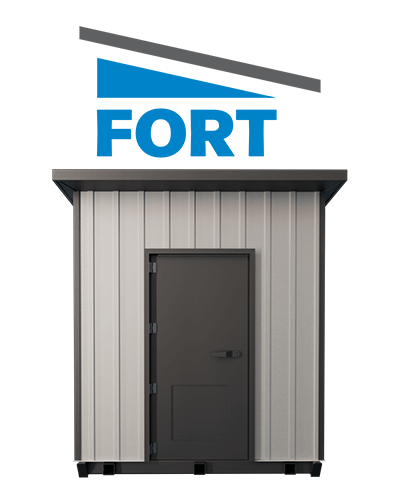
The FORT® is an on-site refuge designed to protect occupants when exposure conditions exceed what a structure can handle or when evacuation routes are compromised. Built from non-combustible EVG-3D panel construction with a managed breathable air system, sealed dual-door entry, and communication systems, the FORT is a planned, purpose-built component of a property's overall wildfire safety strategy. It occupies up to 8 people and provides fresh breathable air for 4 hours. It works alongside the siding on your home, the defensible space around it, and your evacuation planning.
Learn About the FORT
Frequently Asked Questions
Key Takeaways
- Non-combustible and ignition-resistant are different classifications with different real-world performance under wildfire exposure
- Fiber cement, stucco, metal cladding, and stone veneer are the 4 non-combustible siding options best suited to luxury properties
- Assembly-level fire ratings (ASTM E119, NFPA 285) matter more than panel-level ratings (Class A, ASTM E84) for exterior cladding
- Ember intrusion at joints, transitions, and vents is a primary ignition pathway on otherwise well-built homes
- Detailing at siding-to-soffit, window perimeters, and stucco control joints is as important as material choice
- Contractor qualification is the binding constraint on fire-resistant assemblies — the spec sheet only matters if the installation matches it
- Home hardening and an on-site refuge each cover a distinct gap in a complete wildfire protection plan
Final Thoughts
Properly specified fire resistant siding reduces the probability of ignition from ember cast, radiant heat, and flame contact. That buys time, preserves the structure, and gives occupants and emergency responders more options. For luxury homeowners in wildfire-prone areas, the cost difference between standard siding and a non-combustible system is modest relative to the replacement cost of a high-value property. The design flexibility in current fiber cement, stucco, and metal cladding products means you're rarely giving up anything aesthetically.
Siding is one piece. Defensible space, home hardening at the roof and vents, evacuation planning, and an on-site refuge strategy all work together. Build the full plan.