Table of Contents
Wildfires do not always ignite homes through direct flames. In many wildfire events, the ignition source arrives in the form of flying embers—small pieces of burning material carried through the air by wind. As vegetation, structures, or fencing burn, fragments can lift into the air and travel ahead of the main fire front. These embers eventually settle onto roofs, gutters, decks, vents, or nearby vegetation, where they may begin a slow ignition if conditions are dry.
Researchers studying wildfire damage frequently observe that embers play a significant role in structure ignitions. Wind allows these small particles to move over terrain and across roads or open areas, sometimes reaching neighborhoods that have not yet seen visible flames. Because of this behavior, homeowners often focus on reducing areas where embers can settle and find fuel. Small improvements—such as clearing debris, adjusting landscaping, or improving building materials—can meaningfully reduce the chance that an ember begins an ignition near the home.
Preparation works best when it begins well before wildfire season. Learning how flying embers behave helps homeowners understand where small vulnerabilities may exist on a property. When these vulnerabilities are addressed through maintenance and thoughtful upgrades, homes become less receptive to ember ignition while still maintaining evacuation planning as the primary safety strategy.
Summary
Flying embers are one of the most common ways homes ignite during wildfires. Wind can carry these burning fragments ahead of the fire front, allowing them to land on roofs, decks, gutters, vents, or landscaping. When embers settle into dry debris or combustible materials, they can begin a slow ignition that gradually spreads to nearby structures.
Several straightforward steps can help reduce this exposure. Maintaining Zone 0 around the home, clearing roofs and gutters, installing ember-resistant vents, and choosing ignition-resistant roofing materials all contribute to improved wildfire resilience. Routine yard maintenance during Red Flag Warning conditions also helps remove debris that could serve as fuel.
Wildfire readiness benefits from a layered approach that includes property maintenance, evacuation planning, and community awareness. These combined strategies help households prepare thoughtfully for wildfire season.
What Flying Embers Are and How Far They Travel
Flying embers—often called firebrands—are small pieces of burning material that become airborne during a wildfire. As trees, vegetation, fencing, and structures burn, fragments can break away and be lifted into the air by wind currents. These fragments may remain glowing or lightly burning as they travel, eventually settling onto surfaces beyond the main fire perimeter.
The distance embers travel depends on several conditions including wind speed, terrain, and fire intensity. Under moderate wildfire conditions, embers may travel several hundred yards. During stronger wind events, particularly when dry vegetation supports active fire behavior, embers may travel significantly farther. In extreme conditions, they can travel for miles. Fire professionals often refer to the ignitions caused by these airborne particles as spot fires, which occur when embers land and ignite fuel ahead of the primary fire.
Spot fires contribute to the way wildfires expand across landscapes. Even when the main fire front remains some distance away, embers can reach structures and vegetation. For this reason, wildfire preparation often focuses on making homes and surrounding areas less receptive to ember ignition. When debris is cleared and ignition-resistant materials are used, embers that land nearby have fewer opportunities to begin a fire.
How Wildfire Embers Ignite Homes
When a flying ember lands on a surface, ignition typically begins gradually. The ember may settle into dry leaves, pine needles, or combustible material and begin smoldering before visible flames appear. Over time, this small ignition can grow and spread to nearby materials such as wood siding, roofing edges, or structural framing.
Several areas of a home tend to collect debris or allow embers to settle. Roof surfaces are one of the most common locations because wind often deposits leaves and needles into valleys, corners, and areas behind chimneys. If this debris remains dry, embers landing in those locations may ignite the material and slowly spread across nearby surfaces. Gutters also deserve attention because they frequently collect leaves and twigs throughout the year. When embers land within these materials, they can ignite the debris and allow fire to spread toward rooflines. Attic and foundation vents can also allow embers to enter structures if the openings are not protected by appropriate mesh screening.
Decks and fences create additional pathways for ember ignition. Small debris trapped between deck boards or beneath structures may collect embers carried by wind. Wooden fences connected directly to structures can also allow fire to move gradually toward the building if an ember ignites part of the fence line.
Zone 0 and Landscaping Moves That Block Embers
Wildfire agencies define Zone 0 as the first five feet surrounding a home. Because embers often settle close to structures, reducing combustible materials in this area helps limit potential ignition points.
Key landscaping adjustments in Zone 0
- Replace wood mulch with gravel, stone, or other non-combustible ground cover
- Keep shrubs and plants away from siding and deck edges
- Trim branches above roofs to reduce debris in gutters
- Maintain spacing between plants
- Store firewood away from structures
Consistent maintenance helps reduce dry debris where embers could settle and supports overall wildfire resilience.
Hardening Details That Reduce Ember Risk
Home hardening focuses on construction details and materials that help structures resist ember ignition. These improvements address areas where embers often settle or where airflow could carry embers into interior spaces.
Key home hardening improvements
1. Ember-resistant vents
Install ember-resistant vents with 1/8-inch metal mesh to help block embers from entering attic or crawl spaces while still allowing airflow. Some vent designs include baffles or shields that guide embers away from openings.
2. Class-A fire-rated roofing
Roofing materials influence ember exposure. Class-A fire-rated roofing such as metal, tile, or asphalt composition shingles helps reduce the chance that airborne embers ignite roof surfaces.
3. Deck design and enclosed spaces
Screening or enclosing the underside of decks helps prevent debris from collecting where embers might settle. Ignition-resistant decking materials and enclosed eaves also reduce exposed surfaces where embers could gather.
Yard Maintenance on Red Flag Warning Days
Weather conditions influence how easily embers travel and ignite nearby materials. Red Flag Warning days often bring strong winds, low humidity, and dry vegetation, which allow embers to move more easily.
During these periods, simple maintenance helps reduce potential fuel sources. Clearing gutters and rooflines, sweeping decks and patios, removing debris piles, and trimming vegetation near structures all help limit materials that embers could ignite.
Routine upkeep throughout the year makes these tasks easier. Clean roofs, gutters, and landscaping help homes stay better prepared during periods of elevated wildfire risk.
Preparing for Red Flag Warnings
Resources for Ember Protection
Homeowners often benefit from inspection tools and guidance provided by local wildfire agencies. Many communities offer home wildfire assessments or educational resources that help residents identify areas where improvements may be helpful. These resources typically focus on debris removal, building materials, and landscaping adjustments.
Common tools and resources include wildfire home inspection checklists, ember-resistant vent retrofit guides, and defensible space planning materials. Local Fire Safe Councils and wildfire preparedness organizations also provide guidance tailored to regional conditions. These resources help homeowners prioritize improvements that make the greatest difference.
Educational materials about wildfire behavior can also be useful. For example, understanding how human-caused embers from fireworks behave or learning about the ways forest fires begin provides additional context for wildfire preparation. When homeowners understand how ignitions develop, they can make informed decisions about maintenance and property design.
Where the FORT® Fits
Wildfire preparation works best as a layered approach, where multiple strategies support overall safety and response.
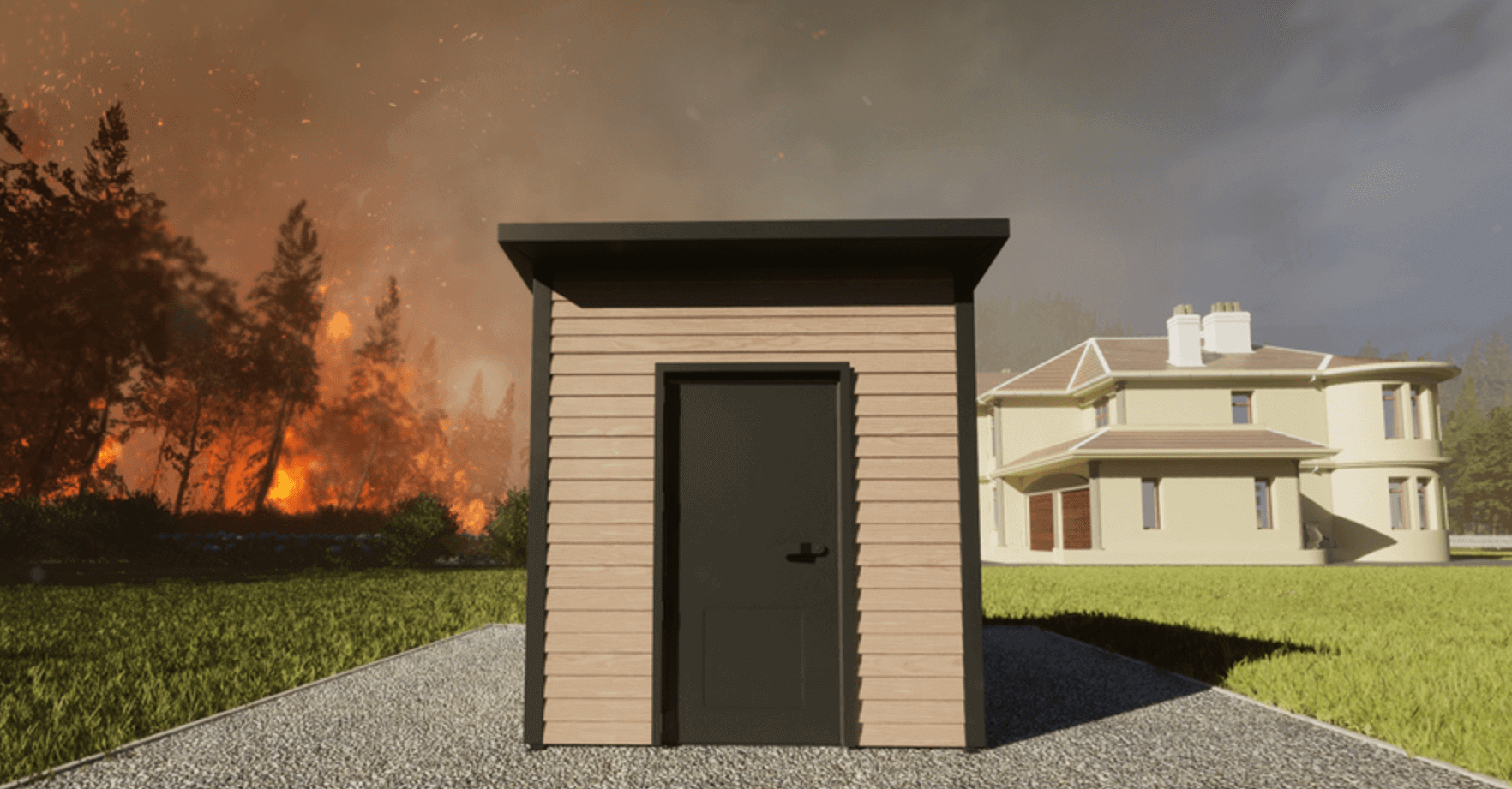
Property maintenance, defensible space, building upgrades, and evacuation planning all contribute to wildfire readiness. These steps reduce ignition risk, limit how fire spreads, and help ensure people can leave safely when conditions change.
Within that broader framework, some homeowners incorporate the FORT® as an additional layer of protection.
The FORT® is a fire-resistant refuge structure installed on a property and designed to provide temporary protection during extreme wildfire conditions if evacuation routes become compromised or conditions change rapidly. Inside the structure, life-support systems maintain breathable air while communication systems allow occupants to remain in contact with pre-identified contacts and emergency responders.
Some homeowners also incorporate the FORT® into broader preparedness planning to help safeguard valuables or items that are difficult to evacuate quickly. When integrated thoughtfully, it complements defensible space, home hardening, and evacuation readiness.
Evacuation remains the safest option whenever it is possible and recommended by local authorities. Within a layered preparedness strategy, however, the FORT® can serve as an additional on-site refuge option when wildfire conditions become unpredictable.
FAQs
Key Takeaways
- Flying embers are a common source of structure ignitions during wildfires.
- Embers can travel ahead of the main fire and settle on roofs, decks, vents, and landscaping.
- Maintaining Zone 0 around the home helps reduce available fuel near structures.
- Ember-resistant vents, Class-A roofing, and deck screening contribute to home hardening.
- Regular yard maintenance during Red Flag Warning conditions helps limit debris that embers could ignite.
- Wildfire preparedness benefits from a layered approach that includes property maintenance, evacuation planning, and resilient design.
Final Thoughts
Wildfire preparation often begins with understanding how fires interact with homes and communities. Flying embers illustrate how small ignition sources can influence the spread of wildfire within developed areas. When homeowners recognize where embers tend to settle, they can make targeted improvements that reduce potential ignition points.
Landscaping choices, building materials, and routine maintenance all play meaningful roles in wildfire resilience. These steps are practical and manageable for many households, especially when implemented gradually over time. Local fire agencies and community wildfire organizations often provide additional guidance that helps homeowners prioritize improvements.
When these efforts come together—defensible space, home hardening, evacuation planning, and thoughtful property design—communities are better prepared to navigate wildfire season with greater awareness and resilience.