Table of Contents
- What a Red Flag Warning Means
- Red Flag Warning vs Fire Weather Watch
- What to Do the Moment a Red Flag Warning Is Issued
- How to Prepare Your Home in the First 60 to 120 Minutes
- Which Alerts to Turn On Before Red-Flag Season
- Where the FORT Fits on a Red-Flag Day
- Frequently Asked Questions
- Key Takeaways
The wind comes up after dark, the humidity drops into the single digits, and your phone lights up with an alert from the National Weather Service: a Red Flag Warning is in effect for your county through tomorrow evening. If you've lived in fire country for a while, you've seen the term. Fewer people can say, in the moment, exactly what it means, how seriously to take it, and whether it's telling them to leave.
This guide answers those questions. It covers what a Red Flag Warning actually is, who issues it and why, how it differs from a Fire Weather Watch, how long one usually lasts, and how to decide in advance what would move your household from ready to gone. When you want the full hands-on readiness checklist for the day itself, our fire evacuation checklist walks through the go-bag, the vehicles, and the documents step by step. This post is the part that comes first: understanding the alert well enough to act on it without second-guessing.
One thing sits above everything else here. Evacuation is always the safest choice, and leaving early is always better than leaving late. A Red Flag Warning isn't an order to go. It is the cue to be ready to, and the households that come through these days calmly are the ones who decided what they'd do before the wind ever picked up.
In Short
A Red Flag Warning is a National Weather Service alert that dangerous fire weather is happening now or is expected within about 24 hours, usually some combination of strong wind, very low humidity, and dry vegetation. It's a weather alert. Evacuation orders are a separate thing that comes from local fire and law enforcement, so a warning is your signal to shift from watching conditions to acting on them, well before any order arrives.
Treat the warning as a decision point: confirm it's real, know how it differs from a Fire Weather Watch, get your alerts working, and settle on the exact conditions that would make you leave. Evacuation comes first in any real plan. If you have the FORT®, a Red Flag Warning is also your cue to move valuables into it: photos, documents, anything irreplaceable, protected even if the house itself doesn't survive. Evacuating remains the priority for people; the FORT's job is protecting what you leave behind.
What a Red Flag Warning Means
A Red Flag Warning means the National Weather Service has determined that weather dangerous for fire is occurring or will occur shortly, usually within the next 24 hours. Forecasters issue it when they expect a mix of conditions that let a new ignition grow fast and spread hard. It flags the state of the atmosphere. A warning can be active with no fire burning anywhere near you.
Three conditions usually combine to trigger one:
- Sustained strong winds or frequent gusts, often 20 to 25 mph or higher, which push flames and carry embers ahead of a fire.
- Very low relative humidity, frequently at or below 15 percent, which dries out grass, brush, and fine fuels.
- Dry, cured vegetation on the ground and nearby, the fuel that carries fire across a landscape.
Local National Weather Service offices set the exact thresholds for their region, so the numbers that trigger a warning in the Sierra foothills differ from the ones used on the coast. For the background on the conditions themselves and how fire weather safety works, the National Weather Service keeps a wildfire safety hub. To see whether a warning or an active incident affects your specific area right now, the alerts and maps covered later in this post are the faster path. This post stays on understanding the alert and the decisions around it; the companion guide linked in the introduction covers the hands-on readiness steps once you've confirmed a warning is live.
Red Flag Warning vs Fire Weather Watch
A Fire Weather Watch and a Red Flag Warning describe the same danger at two different stages of certainty. A Watch means dangerous fire weather is possible, usually 12 to 72 hours out. A Warning means those conditions are here or nearly here. The Watch is the heads-up. The Warning is go-time.
Both fall under the label "fire weather," which is simply weather that makes wildfires more likely to start and spread. The National Weather Service uses the Watch-then-Warning structure to escalate as its forecasts firm up, the same pattern it follows for severe thunderstorms and floods. Knowing which one you're under tells you how much runway you have.
| Fire Weather Watch | Red Flag Warning | |
|---|---|---|
| Timing | Conditions possible in 12 to 72 hours | Conditions occurring now or within about 24 hours |
| Certainty | Danger may be coming | Danger is here or imminent |
| What it asks of you | Review your plan, check supplies, watch for an upgrade | Confirm alerts, ready to leave, know your trigger |
A Watch often becomes a Warning as the event nears, so a Watch is time to prepare rather than a reason to wait. If you hold off until the Warning lands, you're doing the same preparation in a tighter, more stressful window, sometimes in the dark.
How long a Red Flag Warning lasts
A Red Flag Warning runs for a specific window that the National Weather Service sets, with a defined start and end time, usually anywhere from several hours to a day or more. It ends when the dangerous conditions ease, and forecasters can extend it if the wind and dryness hold. When you get the alert, note its expiration, then treat the whole window as elevated risk rather than assuming the danger tracks the hour the warning was issued.
What to Do the Moment a Red Flag Warning Is Issued
The moment a warning lands, shift from monitoring to active readiness, and if you're placed under an evacuation order or your own trigger is met, leave early. Nothing else on this page outranks that. Early departure on open roads in clear air beats a late departure through smoke and traffic every time.
Active readiness is a short mental checklist before it's a physical one. Confirm the warning against an official source rather than social media, put your alerts where you'll hear them, make sure the people in your household know it's a high-risk day, and get your vehicles and go-bags to a state where leaving is a five-minute job: fueled or charged, backed in or turned around so they're facing out, with go-bags already loaded. If you have the FORT, this is also a good moment to start moving valuables into it, whether or not you end up leaving. The full room-by-room version of that readiness pass, what to pack, how to stage the car, which documents to grab, lives in our written fire evacuation checklist. Print or save it before fire season so the steps aren't something you're reading for the first time on the day.
Set your go/no-go trigger in advance
Decide, before any warning arrives, exactly what moves your household from ready to leaving. A workable trigger names a specific combination: an official evacuation warning for your zone, a new ignition within a set distance, a public safety power shutoff, or visible smoke and ember fall. Write it down and make sure everyone knows it. It helps to understand how officials escalate their own instructions, from get-ready messaging through a hard order to go. California's Ready, Set, Go approach from CAL FIRE, at Ready for Wildfire, is a solid backbone for the whole sequence. The goal is simple: nobody should be improvising a decision to leave while the wind is throwing embers.
How to Prepare Your Home in the First 60 to 120 Minutes
If you have an hour or two before conditions worsen, spend it on the handful of moves that cut ember ignition risk the most. Wind-blown embers ignite most homes during a wildfire. They can land well ahead of the flame front and find anything dry tucked into a corner, so a fast pass on the exterior removes the easy targets. If you're evacuating, do only what's quick and safe, then go.
The highest-value moves, if you only get to a few, are clearing leaf litter and needles from gutters and the roof, sweeping decks and moving anything flammable away from the house, and clearing the first 5 feet around the structure (Zone 0) of mulch, dead plants, and firewood. Close windows and vents, and if you have time, connect hoses and leave water sources accessible for firefighters. If a standby generator or a water delivery system is part of your setup, test it now rather than finding out it won't start once the power's already out, and disable any automatic garage door opener that doesn't have battery backup, so a power outage doesn't trap a car inside. Why these specific moves matter comes down to how homes actually ignite, which we break down in our guide to how flying embers ignite homes. None of it replaces leaving. It buys your house a better chance for the hours you're not there to defend it. For the last walk-through right as you're headed out the door, HVAC, gas, doors, and lights, our fire evacuation checklist covers it step by step.
Which Alerts to Turn On Before Red-Flag Season
A warning only helps if it reaches you, so set up your alerts before fire season starts rather than on the day one is issued. The right stack gets a warning to your phone whether you're asleep, at work, or away from home. Enable these once and check them at the start of each season:
- Wireless Emergency Alerts: the government messages that come to your phone automatically. Keep them enabled in your phone's settings so evacuation warnings and orders reach you.
- Your county's emergency notifications: most counties run an opt-in system for local warnings and evacuation orders. Search your county name plus "emergency alerts" and sign up with your address.
- Watch Duty: a free nonprofit app, at watchduty.org, that maps active fires, aircraft, and evacuation zones in real time, staffed by first responders, dispatchers, and reporters.
- An official live map, bookmarked so you can verify active conditions near you. Our roundup of the best real-time California wildfire maps is a good place to start, instead of relying on rumor.
Set these up for the whole household. The parent who's traveling, the family member who sleeps through a text, and the teenager home alone each need their own path to the same warning.
Where the FORT Fits on a Red-Flag Day
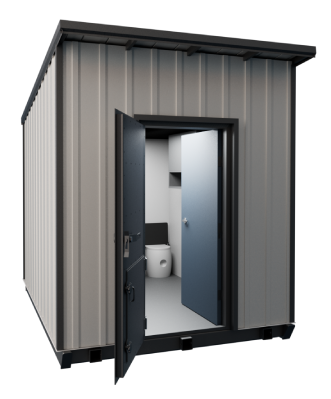
Everything above comes first. Leaving early, keeping your alerts live, and hardening the house are the core of a red-flag-day plan. An on-site refuge does double duty on top of that: if evacuation routes are ever cut off, it's a planned place to be, and if you evacuate safely, as you should whenever you can, it's already holding what you didn't have room to carry out.
A planned layer in a broader strategy
The FORT (Fire-resistant Onsite Refuge Technology) is an engineered, above-ground structure built for wildfire-specific conditions, with a managed air system and sealed construction. It's designed to work alongside evacuation planning and home hardening, not replace either one. Approached that way, it's part of a layered wildfire protection plan, decided on calmly and in advance, the same as your defensible space and your go-bag: a place to be if the road out is gone, and a place to put what you can't replace if you go.
How it fits the day-of sequence
On a red-flag day, the refuge doesn't change your first moves. You still confirm the warning, ready the vehicles, watch for your trigger, and leave when it's met. It sits in the plan as the answer to a single question most preparedness checklists skip: what happens if the road out is already gone? Whether an on-site refuge belongs in your plan is a decision for a calm afternoon, long before any warning. Either way, valuables go in before you go, not after.
Frequently Asked Questions
A Red Flag Warning is a National Weather Service alert that dangerous fire weather is occurring or expected within about 24 hours. Forecasters issue it when strong wind, low humidity, and dry vegetation combine to let a fire start easily and spread fast. It describes the conditions, so a warning can be active before any fire has started, and it's your cue to move from watching to preparing. Background on fire weather safety is on the National Weather Service wildfire safety hub.
A Fire Weather Watch means dangerous fire weather is possible in the next 12 to 72 hours, while a Red Flag Warning means those conditions are here or imminent. The Watch is the early heads-up, and the Warning is the signal to act. A Watch is often upgraded to a Warning as the event gets closer, so a Watch is the time to get ready rather than wait. Our fire evacuation checklist covers how to prepare once a warning is issued.
When a Red Flag Warning is issued, shift into active readiness and be prepared to leave early if you're told to or if your own trigger is met. Confirm the warning against an official source, make sure your alerts are on, ready your vehicles and go-bags, and do a quick pass on the house to clear gutters, decks, and the area right around it. If you have the FORT, this is also the moment to move irreplaceable valuables inside it, whether or not you end up evacuating. Evacuating early is always the safest choice. A written fire evacuation checklist makes the steps automatic on the day.
A Red Flag Warning lasts for a specific window set by the National Weather Service, with a defined start and end time that usually runs from several hours to a day or more. It ends when conditions ease, and it can be extended if the dangerous weather holds. Always check the current warning for its exact expiration on the National Weather Service.
A Red Flag Warning does not require you to evacuate. It's a weather alert, and evacuation orders are separate instructions issued by local fire and law enforcement authorities. Treat the warning as your readiness signal: leaving early is always the safest choice once conditions call for it. It's also worth using that window for anything you can do in advance, including moving valuables into the FORT if you have one, so they're protected whether or not you end up leaving.
Key Takeaways
- A Red Flag Warning means dangerous fire conditions are here or within about 24 hours
- It's a weather alert; evacuation orders are separate and come from local authorities
- A Fire Weather Watch is the earlier heads-up, 12 to 72 hours out; a Warning means act now
- Warnings run for a set window, usually hours to a day or more, and can be extended
- Decide your go/no-go trigger before the day, so no one improvises the decision to leave
- Enable your alerts before fire season so the warning actually reaches you
- Evacuation always comes first; an on-site refuge is one planned layer, never a substitute for leaving
Final Thoughts
A Red Flag Warning rewards the households that already have a plan and unsettles the ones that don't. The work that makes the day calm happens earlier: the alerts you enabled, the trigger you agreed on, the go-bags already packed by the door. When the alert comes, your job is to execute what you decided when your head was clear.
Build the plan on a normal afternoon, then let a red-flag day simply put it into motion. Keep evacuation at the center of it, harden the parts of your property you can, and if you have the FORT, make moving your valuables into it part of that same muscle memory. Look into all of it on a calm day, well before any warning is on your phone.