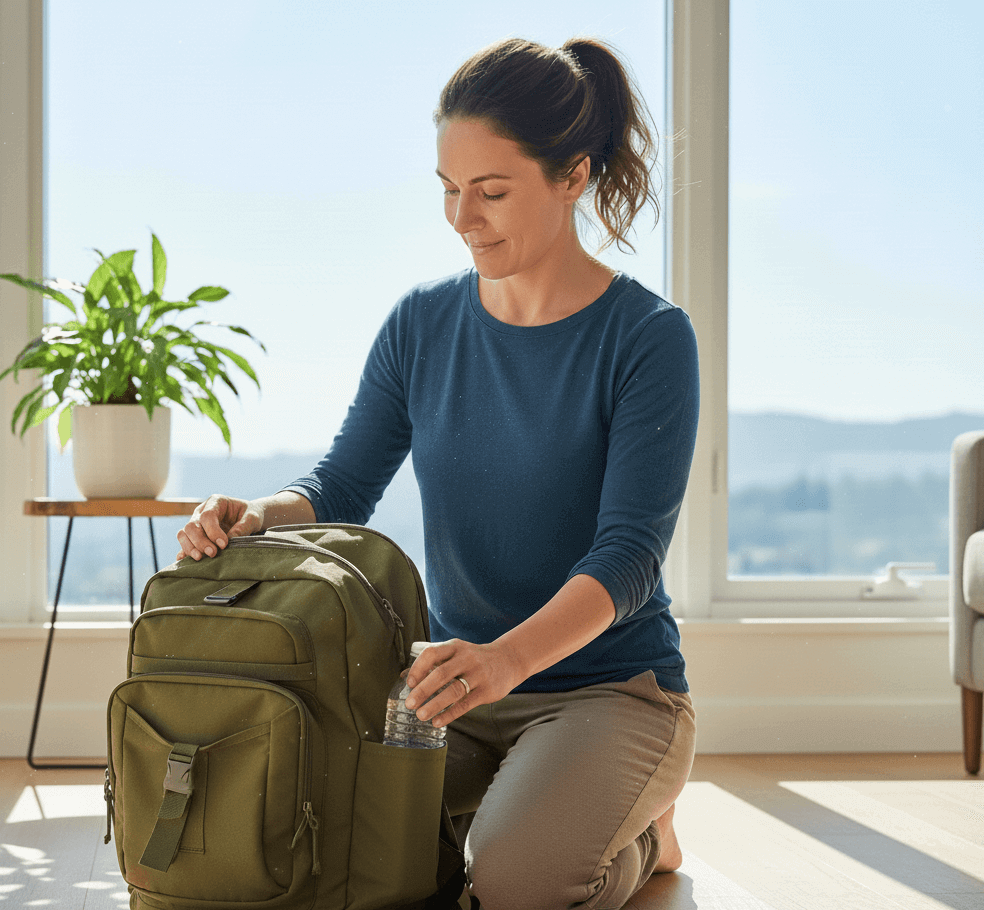
When a wildfire threatens your area, time becomes the most limited resource you have. Evacuation orders can escalate quickly, smoke can reduce visibility in minutes, and traffic congestion can close escape routes faster than expected. A go bag keeps essential items in one place so you can leave immediately when conditions change, without scrambling under pressure. Fire agencies and community preparedness organizations consistently emphasize that households who evacuate early—and with supplies already packed—are better able to leave safely and avoid last-minute danger. A wildfire go bag is not about preparing for the worst-case scenario; it’s about enabling early, decisive evacuation. Go bags support readiness and speed, but they never replace following official evacuation orders.
In Short
For many households, evacuation isn’t announced with hours of notice. It’s often a sudden shift from monitoring conditions to leave now when smoke thickens, winds change, or a road closes. Having essentials packed ahead of time removes hesitation when every minute matters.
- A go bag is a lightweight evacuation bag packed in advance
- It contains essentials you need for the first hours or days away
- Every household member should know where it’s stored
- Go bags support early evacuation, not sheltering in place
Wildfire preparedness groups consistently stress that preparation reduces hesitation. When your go bag is ready, you can focus on when to leave—not what to grab.
Contents
- What Is a Go Bag
- What to Pack When Evacuating for a Fire
- Essentials: Water, Food, Meds, First Aid & Tools
- Documents & Cash: The Grab-and-Go Folder
- Clothing, Hygiene & Comfort Items
- Kids, Elders & Pets: Special Add-Ons
- Packing Strategy: Weight, Containers & Storage
- Maintenance & Emergency Go Bag Checklist
- Plan & Routes
- Go Bag vs Emergency Preparedness Kit
- What a Go Bag Can—and Can’t—Do
- Last-Resort Planning: Where a FORT® Fits
- Key Takeaways
- Conclusion
- Frequently Asked Questions
What Is a Go Bag?
A go bag is a portable evacuation bag kept ready during wildfire season. It’s designed for speed and mobility, not long-term comfort or self-sufficiency.
Wildfires behave differently than many other disasters. Wind shifts, dry fuels, and terrain can cause conditions to deteriorate rapidly. According to guidance from Ready for Wildfire’s emergency supply kit recommendations, households in fire-prone areas should prepare evacuation kits well before fire season begins, because waiting until smoke is visible often leaves too little time to act.
A go bag matters because wildfires:
- Escalate quickly and unpredictably
- Disrupt power, communications, and road access
- Create heavy smoke that complicates movement and visibility
Unlike emergency kits meant for sheltering at home, go bags help you leave immediately when evacuation becomes necessary. Having one ready allows you to focus on routes, alerts, and timing instead of gathering supplies.
What to Pack When Evacuating for a Fire
Most wildfire preparedness organizations agree on a core set of evacuation essentials. Community preparedness guidance from Project Wildfire’s emergency kit resources and similar organizations emphasizes keeping bags lightweight while covering critical needs.
A wildfire go bag should include:
- Water and non-perishable food
- Prescription medications and first aid
- Important documents and cash
- Protective clothing and hygiene items
- Chargers, flashlights, and communication tools
- Pet supplies, if applicable
This list is meant to be scanned quickly when time is limited. The sections below explain how to pack each category thoughtfully—without overloading your bag or slowing evacuation.
Essentials: Water, Food, Meds, First Aid & Tools
These items support basic health and safety during evacuation:
- Bottled water or refillable bottles
- Ready-to-eat, non-perishable food
- Prescription medications (ideally 3–7 days)
- Inhalers, EpiPens, or other critical medical items
- N95 or P100 masks for smoke exposure
- Basic first-aid kit
- Flashlight or headlamp
- Multi-tool or small knife
Wildfire smoke and heat are among the most common evacuation hazards. Ready for Wildfire’s emergency supply kit list recommends prioritizing respiratory protection, hydration, and medications over comfort items. If weight becomes an issue, reduce food or tools before removing medications or smoke protection.
Documents & Cash: The Grab-and-Go Folder
Important paperwork becomes essential immediately after evacuation. Many people don’t realize how quickly they’ll need identification and insurance information once displaced.
Keep these items together in a waterproof folder:
- Government IDs or copies
- Home, auto, and health insurance policies
- Property deeds or lease agreements
- Emergency contact list
- Medical information
- Cash in small bills
Fire Safe Marin’s evacuation go-kit recommendations emphasize that physical copies matter when power, internet, or cell service is unreliable. Having documents ready reduces stress during shelter check-ins, hotel stays, or insurance claims.
Clothing, Hygiene & Comfort Items
Choose clothing and hygiene items that protect you from wildfire conditions:
- Long-sleeve cotton or wool clothing
- Sturdy shoes and socks
- Hat and protective eyewear
- Basic toiletries (toothbrush, wipes, sanitizer)
- Seasonal items (warm layers or sun protection)
Fire Safe organizations note that smoke, embers, and heat exposure are more common than people expect during evacuations. Protective clothing often matters more than multiple outfit changes, especially if you’re outside or moving between locations.
Kids, Elders & Pets: Special Add-Ons
Households with dependents need additional planning. According to resources from Neighbors Ready’s go-bag guidance, many evacuation delays occur because families try to gather these items at the last minute.
Consider adding:
- Infant supplies (diapers, formula, bottles)
- Mobility aids or medical equipment for elders
- Comfort items for children
- Leashes, carriers, and pet food
- Veterinary records and medications
These needs are difficult—or impossible—to improvise during evacuation. Preparing them ahead of time helps ensure everyone can evacuate safely and calmly.
Packing Strategy: Weight, Containers & Where to Store It
How you pack your go bag is just as important as what you pack:
- Use backpacks or lightweight duffels
- Keep weight manageable for quick movement
- Label bags by person if needed
- Store bags near primary exits
- Consider vehicle storage during peak fire season
Evacuation guidance from Fire Safe Marin notes that bags stored deep inside homes or overloaded with items often slow evacuation rather than help it. If you hesitate to lift or carry the bag, it’s too heavy.
Maintenance: Rotation Calendar & Emergency Go Bag Checklist
Go bags require regular upkeep to stay useful:
- Replace expired food and medications
- Update documents annually
- Rotate batteries and charging cables
- Adjust for seasonal needs
Preparedness organizations like Project Wildfire recommend reviewing go bags at least once a year—ideally before wildfire season begins. A checklist helps ensure nothing critical is missed as household needs change.
Check back next week to review our next article where we review your emergency go bag checklist.
Plan & Routes: Your Go Bag Only Works With an Evacuation Plan
A go bag supports evacuation. It does not replace planning. Fire agencies consistently stress that preparedness tools are only effective when paired with clear decisions.
Every household should:
- Know at least two evacuation routes
- Sign up for local emergency alerts
- Establish a family communication plan
- Decide in advance when to leave
If you wait to make decisions during an emergency, you’re already behind. A go bag works best when everyone knows the plan and can act immediately.
Fire Evacuation Checklist
Build the Bigger Kit: Go Bag vs Emergency Preparedness Kit
These tools serve different purposes:
- Go bag: Immediate evacuation
- Emergency preparedness kit: Longer disruptions or sheltering elsewhere
Organizations like Ready for Wildfire recommend having both. A go bag helps you leave safely, while a larger preparedness kit supports longer disruptions once you’ve reached safety. Treat them as complementary, not interchangeable.
What a Go Bag Can—and Can’t—Do
A go bag:
- Helps you evacuate quickly
- Keeps essentials organized
- Reduces stress during high-pressure decisions
A go bag cannot:
- Protect you if you delay evacuation
- Replace official alerts or evacuation orders
- Guarantee safety if escape routes close
Preparedness reduces risk, but it doesn’t eliminate it. Early action remains the most important factor in wildfire safety.
Last-Resort Planning: Where a FORT® Fits
A go bag is designed to support early evacuation, which remains the safest and preferred response to wildfire threats. In rare situations, however, fires can move faster than expected, cutting off routes or reducing visibility before evacuation is possible. In those last-resort moments, a purpose-built, tested refuge like FORT® can provide temporary protection. A FORT® does not replace evacuation, preparedness, or defensible space work; it serves only as a backstop when no safe escape remains. Wildfire safety works best as a layered system, with evacuation first and FORT® reserved strictly for emergencies when all other options have closed. Learn more about FORT® design, use, and testing:
Key Takeaways
- A go bag is designed to support early wildfire evacuation, not sheltering in place.
- Packing essentials ahead of time reduces delays and decision-making during fast-changing fire conditions.
- The most effective go bags prioritize mobility, health, and communication over comfort.
- Every household member—including children, older adults, and pets—should have their needs planned for in advance.
- A go bag works best when paired with a clear evacuation plan and known routes.
- In rare, last-resort situations, additional safety measures may apply—but evacuation always comes first.
Preparedness is not about predicting exactly when a fire will occur. It’s about removing friction so you can act quickly and confidently when conditions change.
Conclusion
Wildfires rarely provide much warning, but preparation gives you control over how you respond. A well-built go bag keeps critical items in one place so you can leave quickly, calmly, and with fewer decisions to make under stress. It’s a practical tool that supports early evacuation and helps households act before conditions become dangerous.
When paired with an evacuation plan, route awareness, and attention to official alerts, a go bag strengthens your overall wildfire readiness. While no single step guarantees safety, taking action ahead of time puts you in a far better position when every minute matters.
Frequently Asked Questions
What is a go bag?
A go bag is a portable evacuation bag packed in advance with essentials you need to leave quickly during an emergency. For wildfires, it’s designed to support early evacuation—not sheltering in place.
What should I include in a go bag for a wildfire?
Include water, food, medications, documents, protective clothing, chargers, and pet supplies if applicable. Fire agencies recommend prioritizing health, safety, and mobility.
Do I really need a go bag if I plan to evacuate early?
Yes. Go bags make early evacuation easier by removing last-minute packing decisions. Even early evacuations can happen quickly when conditions change.
How many go bags should a family have?
Ideally, each adult should have their own go bag. Children and pets can share some items, but critical medications should be duplicated when possible.
Where should I keep my emergency go bag?
Store it near your primary exit or in your vehicle during wildfire season. If it’s hard to reach, it won’t help when time is limited.