Table of Contents
A well-staffed estate in the California foothills can take months to harden against wildfire and minutes to lose. That gap between investment and preparation is exactly what this guide is designed to close.
Fireproofing a luxury property isn't just a scaled-up version of what a suburban homeowner does on a weekend. It requires a different level of planning: architect-grade material decisions, a grounds strategy that manages fuel across 100 feet or more, staff protocols that activate before an evacuation order arrives, and documentation practices that hold up to an insurance claim. This guide covers all of it, in order, with enough specificity to brief a landscape architect, a general contractor, or an estate manager.
One framing note before we get into it: evacuation is always the right first response when authorities issue an order. Everything in this guide supports better outcomes if you leave early, and provides a more resilient property if conditions ever change faster than anyone expected. The two aren't in conflict. A well-fireproofed estate is a more evacuatable estate, because it gives you more time and more choices.
In Short
Fireproofing a home from wildfires at the estate level means addressing 4 interconnected systems: the building envelope (roof, vents, windows, cladding), the surrounding grounds (defensible space in zones 0-100 feet), operational readiness (staff protocols and seasonal checklists), and documentation (insurance compliance and inspection records). Each layer reinforces the others. A Class A roof doesn't perform well if embers enter through a standard mesh vent. Cleared defensible space buys time but doesn't matter if the fascia boards are still wood.
For California properties specifically, CAL FIRE's defensible space regulations apply to homes within 100 feet of wildland vegetation, which describes most rural or semi-rural estates. Compliance is a legal floor, not a ceiling. This guide goes beyond compliance and addresses what best-in-class preparation actually looks like. The FORT™, Wildfire Safety Systems' purpose-built on-site refuge, is covered in its own section: including where it fits within a complete estate preparedness plan and what it specifically doesn't replace.
Start Here: Risk Profile
Before specifying any material or designing any defensible space, an estate owner needs an accurate risk profile for the specific property. Wildfire behavior is not uniform, and the variables that determine how a fire approaches and affects a structure are highly site-specific.
The 3 factors with the highest impact on your risk profile are slope, prevailing wind direction, and exposure to wildland vegetation. Slope matters because fire moves uphill roughly 4 times faster than it moves on flat ground; a property on the lower portion of a hill faces meaningfully different timing pressure than one on a plateau. Wind direction determines ember transport: embers can travel a mile or more ahead of the fire front, igniting structures long before the main fire arrives. Exposure to vegetation type and density determines how much fuel is available and how quickly it can generate radiant heat.
For California properties, the California Office of the State Fire Marshal's Fire Hazard Severity Zone maps provide an official starting point. A Very High Fire Hazard Severity Zone (VHFHSZ) designation triggers specific construction and defensible space requirements under state law. But the maps are updated infrequently and don't capture micro-terrain conditions. A professional wildfire risk assessment (typically available through a certified wildfire mitigation specialist) provides the granularity an estate demands.
When reviewing or commissioning a risk assessment, make sure it addresses:
- Slope angle and aspect (direction the slope faces relative to prevailing winds)
- Primary and secondary wind corridors across the property
- Fuel type and density in the surrounding wildland interface
- Ember exposure: distance and direction to likely ignition sources
- Access and egress routes under different fire approach scenarios
This profile drives every decision that follows. It's worth doing before spending anything on materials or construction. The National Interagency Fire Center's home mitigation guidance and the US Forest Service's wildfire defensibility guide both offer solid frameworks for understanding how fire approaches structures under different site conditions.
Architect-Grade Envelope: Roof, Vents, Windows, and Doors
The building envelope (roof assembly, ventilation openings, windows, and door frames) is where most estate home ignitions actually begin. Direct flame contact ignites very few structures during a wildfire. Ember intrusion and radiant heat ignition through envelope weaknesses cause the majority of losses, a finding that runs through both the Insurance Institute for Business and Home Safety's wildfire research and CAL FIRE's home hardening program.
Roof Assembly
A Class A fire rating is the minimum acceptable for any estate in a fire-prone area. Class A assemblies include concrete or clay tile, standing-seam metal, and certain composite shingles. What matters is the full assembly rating, not just the surface material; a Class A shingle over combustible decking can still ignite from the underside if embers penetrate. Specify non-combustible decking (typically 5/8" Type X gypsum board as a thermal barrier layer) beneath the roofing material if you're retrofitting.
Metal standing-seam roofs have become the preferred choice on high-end estates for reasons beyond fire resistance. They're durable, low-maintenance, and available in profiles that read as architectural rather than industrial. Cost is higher than asphalt at installation, but the replacement cycle is far longer.
Roof valleys, eaves, and gutters deserve separate attention. Valleys accumulate debris, and debris in valleys creates a localized fuel source on the structure itself. Box-in eave soffits with non-combustible materials, and install metal drip edge at all roof edges. Clean gutters every fire season, twice in areas with heavy oak or pine canopy overhead. Or eliminate gutters entirely where the architectural design allows and replace with appropriately designed drip channels.
Vents
Standard foundation and attic vents with 1/4" mesh are the single most common ember entry point on residential structures. Embers smaller than 1/4" pass straight through. The correct retrofit is a 1/16" corrosion-resistant mesh screen, or commercially available ember-resistant vent products tested under ASTM E2886 and listed to meet California's WUI building code requirements.
For new construction or major renovation, Vulcan Vents and similar products integrate ember-resistant screening with an intumescent material that expands to seal the vent opening if temperatures rise sharply. They're worth the upgrade on any structure with significant wildfire exposure. The Ready for Wildfire home hardening guide provides a detailed breakdown of vent specifications and compatible products by building type.
Windows and Doors
Single-pane windows fail from radiant heat well before a fire makes direct contact. The glass fractures, the frame burns, and the interior is suddenly exposed. Multi-pane tempered glass is the specification standard for fire-adjacent construction. For estate properties with large window walls or view-maximizing glazing (common in California hillside architecture), the glass area itself becomes a significant radiant heat exposure surface. Interior shutters or exterior aluminum roll shutters provide a secondary barrier during a wildfire event.
Doors are a similarly underattended vulnerability. Solid-core doors with non-combustible weatherstripping perform significantly better than hollow-core. Fit door frames with intumescent seals that expand under heat. If the estate has sliding glass door assemblies, note that the track and threshold are common failure points; specify non-combustible threshold materials and confirm the frame is thermally broken.
Explore Wildfire Prevention Resources
Walls and Cladding: Materials That Defy Embers
Exterior wall cladding is the most visible fire-resistance decision on a home, and on an estate, it's also a design decision. The materials with the best ember-resistance performance have caught up aesthetically with materials that offer almost none. The IBHS Wildfire Retrofit Guide identifies cladding replacement as one of the highest-impact single retrofits available for existing homes in fire-prone areas.
Best-Performing Cladding Options
| Material | Fire Performance | Aesthetic Range | Notes |
|---|---|---|---|
| Fiber cement (e.g., HardiePlank, Nichiha) | Non-combustible surface; Class A rated assemblies available | Wide, wood appearance profiles available | Most common high-performance retrofit; cost-effective at scale |
| Stucco (3-coat traditional or EIFS) | Non-combustible; excellent radiant heat resistance | Mediterranean, contemporary, transitional | Verify no wood trim at penetrations: common failure point |
| Concrete masonry / CMU | Exceptional: non-combustible mass wall | Industrial, contemporary; less residential warmth | Best for outbuildings, equipment storage, secondary structures |
| Natural stone or stone veneer | Non-combustible | High-end, traditional estate aesthetic | Performance depends on installation detail at mortar joints and substrate |
| Steel panel systems | Non-combustible; excellent for contemporary design | Contemporary, modern farmhouse | Specify pre-finished or painted with intumescent coating |
| Wood siding (any variety) | Combustible; ignites from ember contact | Widest natural range | Fire-retardant treatment extends resistance but doesn't equal non-combustible |
The critical detail that most projects overlook is the transition between cladding and trim: window surrounds, corner boards, fascia, and soffit material. An estate can specify stucco walls and still have combustible wood trim at every window opening. Ember accumulation at those transitions is enough to initiate ignition. Specify non-combustible material throughout, or use PVC trim with an intumescent coating where wood profiles are architecturally required.
For properties considering a retrofit on an existing structure, prioritize the home hardening work on the most exposed elevations first, typically the uphill face and the face most directly in the path of prevailing winds. Don't spread the budget evenly across all 4 sides if resources require prioritization.
Grounds Strategy: Zone 0-100, Plant Palettes, and Hardscape
Defensible space around an estate property functions as a fuel management system; its purpose is to reduce the rate of fire spread and radiant heat intensity as a fire approaches the structure. California law mandates 100 feet of defensible space for most homes in wildland-adjacent areas, divided into 2 zones with different treatment requirements. The Oregon State University Extension's wildfire safety guide provides one of the clearest breakdowns of how zone management works at the multi-acre scale typical of estate properties.
Zone 0: 0-5 Feet from the Structure
Zone 0 is the highest-priority zone and the one most often handled incorrectly on estate properties. The goal is to eliminate any ignitable material within 5 feet of the structure's footprint. That means:
- No combustible mulch (use decomposed granite, gravel, or crushed rock)
- No wooden deck furniture left in place during fire season
- No propane or fuel storage adjacent to the structure
- No wood lattice, trellises, or arbors attached to or within 5 feet of the home
- No plantings, including ornamental groundcovers, in direct contact with the foundation
For estates with extensive hardscaping, patios, and outdoor entertaining areas built within Zone 0, the key retrofit is material substitution: replace combustible decking with concrete pavers, stone, or non-combustible composite materials. Outdoor furniture should have a dedicated, covered storage location at least 30 feet from the structure that can be used during red flag conditions.
Zone 1: 5-30 Feet
Zone 1 is maintained as a lean, well-irrigated, low-fuel landscape. The goal isn't to eliminate all vegetation; it's to ensure that if vegetation ignites, the fire doesn't ladder up from groundcover to shrubs to trees in a continuous fuel chain. Spacing matters as much as species selection. For trees in Zone 1, maintain a horizontal clearance between canopy edges of at least 10 feet and limb up trunks to remove branches within 6-10 feet of the ground.
Plant palette for Zone 1 on California estates typically draws from low-water, fire-resistant species: native bunch grasses, low-growing Ceanothus varieties, Salvia, Agave, and succulent groundcovers. Lavender and Rosemary are often cited as fire-resistant but warrant caution: the oils in both are flammable. Keep them well-pruned, well-irrigated, and away from the structure itself.
Zone 2: 30-100 Feet
Zone 2 is fuel reduction, not elimination. The goal is reducing fire intensity and preventing surface fire from climbing into the tree canopy. Thin shrubs so there's no continuous horizontal fuel coverage. For trees, limb up to 1/3 of the tree height and maintain canopy spacing. Clear all dead material regularly; dry season inspection should occur at least twice annually on large properties.
On estates with significant oak woodland, consult with a certified arborist before removing any protected trees. Many counties in California restrict oak removal regardless of fire risk, and aggressive thinning can stress trees that provide both aesthetic and ecological value. Limbing up and removing understory is almost always permissible; trunk removal often requires a permit.
Low-Visual-Impact Tactics That Still Perform
Estate owners frequently resist defensible space measures because they conflict with the landscape aesthetic the property was designed around. Dense canopy, lush groundcovers, and the natural feel of the wildland interface are part of what makes these properties desirable. There are fire-resistant design approaches that preserve much of that character. Lockton's guide to wildfire preparedness for luxury homes addresses this tension directly, noting that high-value property owners have both more to protect and more options for doing it discreetly.
Gravel Bands and Steel Edging
A 3-4 foot non-combustible gravel band at the perimeter of the structure, contained by clean steel landscape edging, eliminates the ember-to-mulch ignition pathway without requiring any disruption to the planted areas beyond it. Decomposed granite in a warm tan or buff color reads as naturalistic in foothill and California landscape contexts. The steel edging creates a visible, maintainable line between the non-combustible zone and the planted zone, useful both for aesthetics and for telling your grounds crew exactly where the maintenance standard changes.
Irrigation Logic During Fire Season
A well-hydrated landscape is a harder-to-ignite landscape. On estate properties with established irrigation infrastructure, run Zone 1 irrigation more aggressively during red flag conditions; the additional soil and plant moisture increases the time it takes for vegetation to reach ignition temperature under radiant heat exposure. Pre-season irrigation system audits should confirm that Zone 1 coverage is complete and that no heads are blocked by vegetation.
For properties on agricultural water or well supply, confirm summer delivery capacity before fire season. This is particularly relevant on ranches and vineyard properties where agricultural demand can compete with landscape irrigation during the same dry-season period when fire risk peaks.
Hardscape Integration
Patios, stone terraces, decomposed granite paths, and gravel courtyards are all assets in a fire-resistant grounds plan. They break up continuous fuel coverage and can serve as radiant heat buffers when positioned between planted areas and the structure. When designing or renovating an estate landscape in a fire-risk area, lean into hardscape as an aesthetic and functional design element rather than treating defensible space as something that has to happen despite the design.
Staff Playbook for Fire Season: Red-Flag Ops, Drills, and Vendor Call-Lists
On a large estate with year-round staff, wildfire preparedness is an operational management problem, not just a physical one. The estate manager, grounds crew, and household staff need clear protocols before fire season begins, not when a red flag warning is issued. The Estate Management Systems fire season guide makes this point clearly: properties with written, practiced protocols consistently outperform those relying on informal decision-making under pressure.
Red-Flag Operations Checklist
A red flag warning indicates conditions favorable to rapid fire spread: low humidity, high winds, dry fuels. When a warning is issued, the estate's protocols should shift automatically. A written checklist assigned to a specific staff role eliminates decision latency under pressure. That checklist should include:
- Move outdoor furniture, cushions, and umbrellas into covered storage
- Confirm Zone 0 is clear of any combustible material that may have been placed since the last inspection
- Verify irrigation is running on the Zone 1 schedule
- Confirm all exterior vents are screened and in good condition
- Close all exterior doors, windows, and garage doors (but leave unlocked for fire service access)
- Notify owners and confirm communication chain is active
- Confirm go-bag and evacuation kit are current and accessible
Download Watch Duty on all staff phones in the area. It provides real-time fire location and perimeter mapping updated by a professional monitoring team. Set it to notify on fires within a defined radius of the property. The FEMA app pushes official emergency alerts and is worth installing alongside Watch Duty. For local notification coverage, Everbridge Nixle connects staff to county-level emergency alerts specific to the property's jurisdiction.
Annual Fire Drill
Estate staff turnover means any protocol is only as reliable as the last training. Run a full walkthrough annually, before fire season, not during it. The drill should cover where documentation and valuables are stored, the evacuation route from each occupied area of the property, the FORT activation procedure if applicable, and the communication chain from staff to estate manager to owners.
Assign roles explicitly. On a large property, the confusion of an emergency is compounded by ambiguity about who is responsible for what. Who calls 911? Who loads the vehicle? Who confirms all staff are accounted for? Write it down and practice it. Our family emergency plan guide provides a practical framework that scales to estate staff.
Vendor Call-List
Establish a current vendor call-list for fire season, updated annually. It should include your wildfire mitigation contractor for post-event inspection, your irrigation company for emergency system audits, your roofing contractor, and your general contractor for any emergency repairs. Relationships with these vendors matter; in the aftermath of a major fire event, demand for contractors spikes sharply. Owners who call their established contractor get calls returned faster than owners calling from a list.
Insurance and Documentation: Photo Sets, Receipts, Inspections, and Compliance
Wildfire insurance claims on large properties can involve tens of millions of dollars in structure value, contents, and loss of use. The documentation requirements to support those claims are substantial, and the gap between well-documented claims and underdocumented ones is significant in both outcome and processing time. The Resident Magazine guide to fire safety for remote luxury homes covers this angle specifically, noting that documentation discipline is one of the most underutilized risk management tools available to estate owners.
Photo Documentation
Complete a whole-property photo documentation annually. That means every room, all 4 exterior elevations, roof condition, mechanical and electrical systems, outbuildings, and landscape areas. Upload to cloud storage with a date stamp. For high-value contents (artwork, wine, furniture, antiques, vehicles), photograph each item individually with any identifying marks or serial numbers visible.
Post-event photo documentation of the property as it existed before the fire is frequently the determining factor in dispute resolution with insurers. A thorough annual photo record eliminates ambiguity about what was on the property before a loss. Our guide to protecting valuables, records, and people covers this in more detail.
Receipts and Appraisals
Maintain a digital record of receipts for all major improvements, including hardening work. Roof replacements, vent upgrades, and cladding retrofits represent significant capital investment and affect both replacement cost calculations and insurance compliance. Appraisals for high-value contents should be updated on a regular cycle; for fine art, wine collections, and antiques, values shift and outdated appraisals can result in underinsurance.
Compliance Documentation
In California, some insurers and county fire authorities are increasingly requiring documented compliance with AB 38 defensible space inspections as a condition of coverage in high-risk areas. Keep records of all official inspections: the inspection date, inspector name, and any required corrective actions taken. Document completion of those corrections with photos. This record becomes important both for coverage continuity and for resale disclosure.
Work with your insurance broker annually to confirm your coverage accurately reflects the current replacement cost of all structures. On estates where significant hardening investment has been made, that documentation can also support discussions around premium adjustments in policies that offer mitigation credits. Several major carriers have expanded these programs in California in response to the wildfire coverage crisis.
For a comprehensive pre-evacuation planning checklist, see our evacuation orders checklist.
Pulling It Together: 90/180-Day Implementation Roadmap
Fireproofing a large estate is not a weekend project, and it shouldn't be approached as one. A staged implementation plan spreads the work across a realistic timeline, keeps contractors and landscape crews sequenced efficiently, and ensures that higher-priority items are addressed first. The NFPA's wildfire home preparation guidance recommends a similar phased approach, prioritizing the immediate structure zone before working outward.
First 90 Days: Risk, Envelope, and Zone 0
- Commission a professional wildfire risk assessment for the property
- Conduct a whole-structure envelope audit (roof, vents, windows, cladding, trim)
- Replace any 1/4" mesh vents with ember-resistant vent products
- Clear Zone 0: remove all combustible material within 5 feet of the structure
- Install non-combustible gravel band at foundation perimeter
- Audit and update insurance documentation: photos, receipts, appraisals
- Confirm staff have Watch Duty and emergency alert apps installed
- Draft and distribute the Red-Flag Operations Checklist to relevant staff
60-180 Days: Envelope Upgrades, Zones 1-2, and Documentation
- Execute any cladding or roofing upgrades identified in the envelope audit
- Complete Zone 1 plant palette review and remediation (remove non-compliant species, adjust spacing)
- Thin Zone 2: limb up trees, remove dead material, establish ongoing maintenance schedule
- Run annual staff fire drill
- Establish vendor call-list and confirm contractor relationships
- Review and update defensible space compliance documentation
- Confirm irrigation system is adequate for fire season Zone 1 requirements
The 90-day list is designed to be executed immediately, regardless of season. The 60-180-day list is most efficiently sequenced in the shoulder season before peak fire risk, typically late winter through early spring in California.
On-Site Refuge: How the FORT Integrates with Routes, Communications, and Rescue Visibility
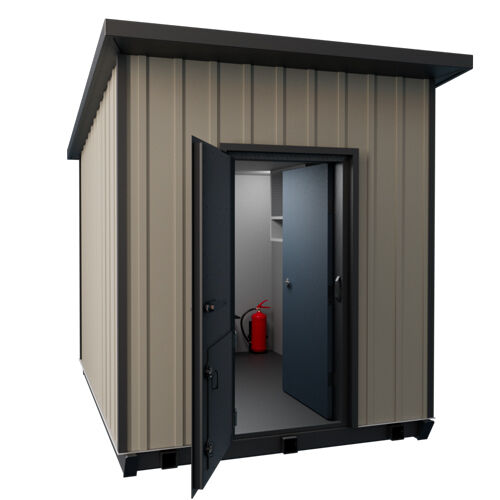 A fully fireproofed estate significantly reduces the probability of structural loss. It doesn't eliminate the scenario where evacuation is blocked and occupants need a protected environment to shelter in while fire passes through. That's where an on-site refuge capability fits within a complete estate preparedness plan.
The FORT™ is a purpose-built, above-ground wildfire refuge structure engineered specifically for that scenario. It's designed and installed as a planned component of a property's wildfire preparedness system, not as a last-minute backup, but as a defined option in the estate's emergency response plan, the same way a generator is a defined backup to grid power.
Integration Points for Estate Properties
On a large property, a few integration details make the FORT significantly more effective:
Siting relative to evacuation routes. The FORT should be positioned so that it doesn't require passing through the highest-exposure areas of the property to reach it. Ideally, it's accessible from the primary residential structure via a path that stays within Zone 1 or hardscaped areas. Discuss siting with your WSS representative during the planning phase; terrain and prevailing fire approach direction both factor in.
Communications during activation. The FORT includes a built-in cell signal booster and Wi-Fi access point for use during a shelter event. For estate properties, confirming that the FORT's Wi-Fi access point is connected to the property's network before fire season is part of the pre-season checklist. When the FORT is activated, occupants can monitor Watch Duty and maintain contact with emergency services and family members throughout the event.
Rescue visibility. If the FORT includes a Personal Locator Beacon (PLB), activation transmits a signal via global emergency satellite network. For estate properties in areas with limited road access, the PLB is a meaningful asset; it ensures that even if cell service is compromised, emergency responders know the location and status of occupants.
What the FORT doesn't replace. Evacuation is always the safer option when an order is issued and routes are accessible. The FORT is designed for the scenario where evacuation is genuinely not possible: roads are blocked, conditions have changed faster than expected, or mobility limitations prevent departure. It's a planned capability within a layered system, not an alternative to having evacuation routes, go-bags, and a clear communication plan.
For ranch and vineyard properties with employees on-site during fire season, the FORT's occupancy capacity (standard unit accommodates up to 8 people) and 4-hour breathable air supply are relevant sizing considerations. Discuss configuration with your WSS representative during planning.
Learn More About the FORT
Frequently Asked Questions
Key Takeaways
- Risk profile first: slope, wind, and exposure determine which hardening investments matter most on your specific property
- Ember intrusion through vents, windows, and trim transitions causes more structure ignitions than direct flame contact
- Zone 0 (0-5 feet from the structure) is the highest-impact defensible space investment and the most commonly neglected
- Non-combustible cladding options (fiber cement, stone, stucco, steel panel) now cover the full range of estate architectural styles
- Staff protocols need to be written, assigned, and practiced before fire season, not during an active event
- Insurance documentation (photos, receipts, compliance records) directly affects claim outcomes and coverage continuity
- An on-site refuge like the FORT integrates into a complete estate preparedness plan as a defined capability, not a fallback
Final Thoughts
A well-prepared estate isn't built on any single decision. It's an accumulation of specific, well-informed choices: about materials, about grounds management, about operational readiness, about what happens when conditions change faster than anyone planned for. Most estate owners already have the professional network to execute this kind of work: architects, landscape designers, contractors, estate managers. The piece that's often missing is a clear framework for sequencing it and understanding which investments carry the most weight relative to the actual risk profile of the property.
Evacuation remains the right first response when officials issue an order. The goal of everything in this guide is to ensure that when you leave, you're leaving a property that has a better chance of still being there, and that if you ever can't leave, you have options. For more on how on-site refuge fits into an estate-level preparedness plan, visit the FORT product page or explore our broader wildfire preparedness resources.