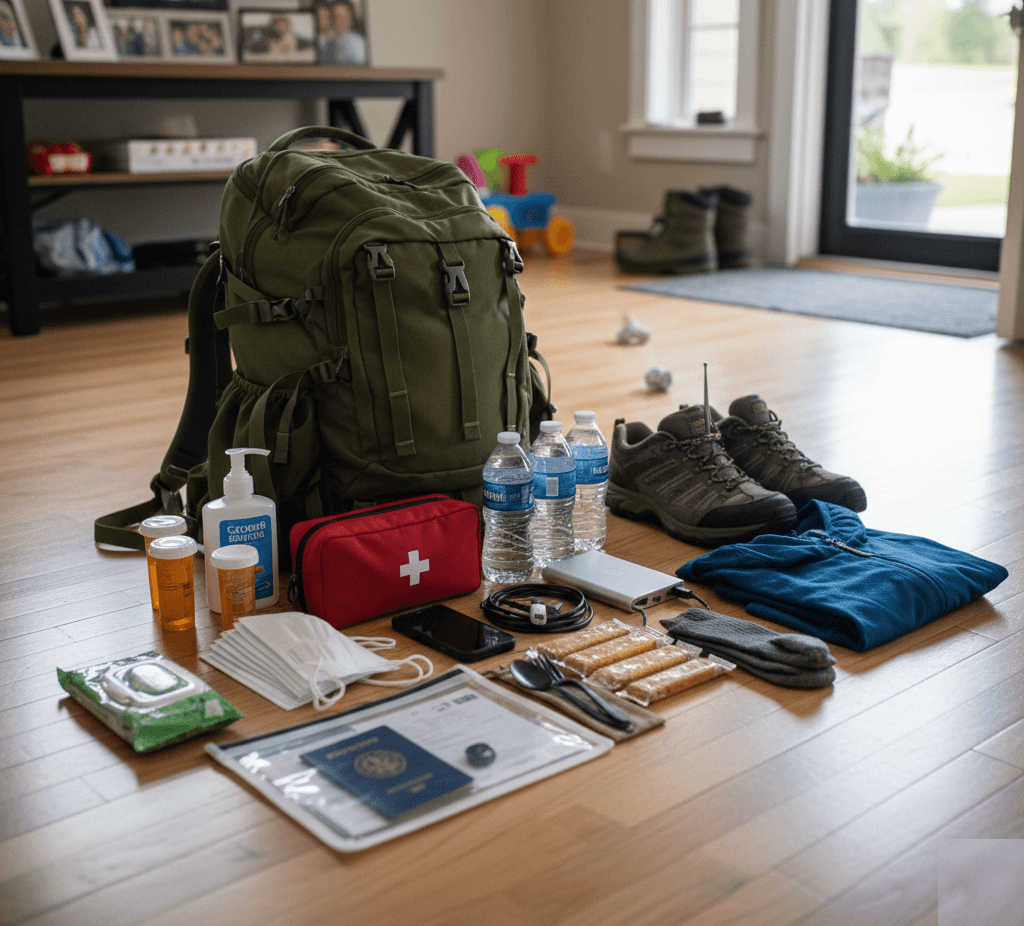
Wildfire preparation is about acting early, not reacting at the last minute. A clear evacuation plan, a ready go-bag, basic home preparation, and reliable information sources reduce confusion and risk when conditions change quickly. The safest choice is always to evacuate early when officials advise it. This guide walks through practical, step-by-step actions homeowners can take before wildfire threatens, so decisions don’t have to be made under pressure.
In Short
Preparing for a wildfire means acting early and planning for evacuation before fire conditions worsen. Know your local risk and alerts, reduce ember ignition around your home with basic hardening and defensible space, and create a clear family evacuation plan with defined roles. Keep go-bags ready, document your home for insurance, and prepare for longer disruptions with a larger emergency kit. Always prioritize early evacuation; last-resort options like FORT® should only be considered when escape is impossible and never as a substitute for leaving early.
Table of Contents
- Know Your Risk: Maps and Local Alerts
- Home Hardening Basics: Roof, Vents, Windows
- Defensible Space and Zone 0 Actions
- Your Family Plan: Roles, Communication, Reunification
- Go-Bag Prep
- Evacuation Steps and Checklists
- Insurance and Photo Inventory
- Build the Bigger Kit
- Last-Resort Planning: When a FORT® Is Considered
- Key Takeaways
- Frequently Asked Questions
- Conclusion
Know Your Risk: Maps and Local Alerts
Start with awareness, not assumptions. Wildfire risk depends on fuels, slope, wind patterns, drought conditions, and how close your home is to the wildland-urban interface. Embers can travel well ahead of visible flames, which means homes far from the fireline can still face rapid changes in conditions.
Use maps to understand what’s happening around you, but prioritize official alerts for decision-making. When Red Flag Warnings are issued, treat that as a readiness trigger: review routes, check supplies, and reduce anything around the home that could ignite.
Know-your-risk checklist
- Sign up for your local emergency alert system and verify your contact settings.
- Bookmark your county or regional incident updates and check them during high-risk days.
- Monitor Red Flag Warnings and fire weather outlooks during hot, dry, windy periods.
- Decide what conditions would prompt you to leave early, before an evacuation order.
For practical guidance on staying safe during wildfire and smoke events—including what to monitor and how to reduce exposure—use A Guide to Staying Safe During Wildfires.
Wildfire Maps: How to Use Best Sites
Home Hardening Basics: Roof, Vents, Windows
Home hardening is about reducing ember entry and ignition points, not guaranteeing protection. The most common vulnerabilities are places embers land and sneak in: roofs and gutters, vents, windows, and small gaps around exterior features. These steps are most effective when done well before fire season and maintained regularly.
Prioritize what you can control quickly. Clearing debris, tightening up openings, and reducing flammable materials attached to the home can meaningfully lower ignition risk during ember showers.
Home hardening checklist
- Clear leaves and debris from roofs, gutters, and roof edges.
- Inspect attic and crawlspace vents and reduce ember entry risk where feasible.
- Check windows and weatherstripping; repair gaps and cracks.
- Clear debris under decks and along exterior edges.
- Move combustible items (mats, planters, cushions) away from doors and windows.
The U.S. Fire Administration’s printable Up in Smoke Home Checklist is a helpful tool for evaluating home readiness and household actions in advance.
For additional homeowner-ready safety actions and seasonal reminders, review the National Fire Protection Association’s NFPA safety tip sheets.
Defensible Space and Zone 0 Actions
Defensible space can reduce ignition risk and improve firefighter safety, but it should never be used as a reason to stay behind. The highest-impact starting point is the area closest to the home—often called Zone 0—because embers can ignite materials right next to the structure even when flames are farther away.
Think of defensible space as reducing receptive fuels, especially within the first five feet. Small, consistent maintenance matters more than a one-time cleanup.
Defensible space and Zone 0 checklist
- Remove combustible items within 5 feet of the home (Zone 0).
- Clear dead vegetation, needles, and leaf litter regularly.
- Trim back vegetation that touches or overhangs structures.
- Keep fences, trellises, and stored materials from creating a direct fuel path to the home.
- Store firewood well away from the home and outbuildings.
Your Family Plan: Roles, Communication, Reunification
A family plan prevents confusion and saves time. It should be written, shared, and simple enough to follow under stress. The goal is early evacuation, clear responsibilities, and a safe reunification plan if you’re separated.
Assign roles based on real life, not ideals. Decide who handles pets, who grabs go-bags, and who contacts the out-of-area person, so no one is improvising at the worst moment.
Family plan checklist
- Assign roles (pets, documents, vehicles, mobility needs).
- Pick a reunification location outside the hazard area.
- Choose an out-of-area contact for check-ins.
- Decide how you’ll communicate if cell service is limited.
- Practice the plan once per year or before peak season.
Go-Bag Prep
A go-bag keeps essentials in one place so you can leave quickly and calmly. Store it near your primary exit and keep it light enough to carry. If your household is larger, consider one bag per person plus a shared tote for items you’ll load into the car.
This is where “how to prepare yourself for a fire” becomes real: your go-bag supports safe movement and stability in the first 24–72 hours after leaving.
Go-bag essentials checklist
- IDs and copies of key documents.
- Prescription medications and basic first aid.
- N95 masks to reduce smoke exposure.
- Phone chargers and a backup battery pack.
- Water and non-perishable food.
- Long sleeves, sturdy shoes, and basic hygiene items.
- Pet supplies and records.
Evacuation Steps and Checklists
Evacuation is the safest option. The most dangerous mistake is delaying departure to “wait and see.” Fires can shift direction quickly, road conditions can change, and evacuation routes can clog with little notice.
Use a checklist so you don’t lose time deciding what to do in the moment. Your goal is to leave early, keep route options open, and avoid driving through smoke or flames.
Evacuation steps checklist
- Leave as soon as warnings escalate or conditions worsen.
- Take your go-bags, pets, and essential documents.
- Shut windows and doors; turn on exterior lights if time allows.
- Wear protective clothing (long sleeves, sturdy shoes).
- Follow official routes and instructions; avoid shortcuts through smoke.
Insurance and Photo Inventory
Once you’ve handled the life-safety essentials, documentation becomes a preparedness multiplier. A quick photo inventory helps support insurance claims and recovery if evacuation happens fast and you can’t gather paperwork.
Don’t aim for perfection. Aim for “good enough” documentation: wide shots of each room, close-ups of valuables, and basic serial numbers when possible, saved in cloud storage.
Insurance and inventory checklist
- Photograph each room with wide-angle shots.
- Capture high-value items and serial numbers where possible.
- Store copies of insurance policies and IDs in cloud storage.
- Keep a simple written list of major assets (vehicles, equipment, valuables).
- Review coverage annually before fire season.
Build the Bigger Kit
A go-bag is for leaving quickly. A larger kit supports longer disruptions, extended evacuations, or temporary displacement. It’s especially helpful if your household may need to shelter away from home for several days.
If you want a structured approach beyond the go-bag, this is a natural next step and a good preview of a full emergency preparedness kit build.
Bigger kit checklist (home or vehicle-ready)
- Extra water, shelf-stable food, and basic meal supplies.
- Spare masks, eye protection, and medications.
- Copies of documents and backup charging options.
- Basic tools, gloves, and first aid replenishment.
- Pet food and sanitation supplies for multiple days.
Last-Resort Planning: When a FORT® Is Considered
Evacuation is always the safest and preferred response. Still, some homeowners plan for rare worst-case scenarios where fire behavior changes rapidly and all escape routes are cut off. Last-resort planning should be approached with clear limits and responsible use.
In rare, last-resort situations when evacuation isn’t possible, a purpose-built, tested refuge like FORT® can provide temporary protection. Always evacuate if you can; a FORT® is a backstop, not a substitute for evacuation.
Discover the FORT®Key Takeaways
- How to prepare for a wildfire starts with early action: alerts, routes, roles, and supplies before smoke is visible.
- Maps support awareness, but official local alerts should guide decisions.
- Home hardening and defensible space reduce ignition risk but never replace evacuation.
- A written family plan with roles and reunification steps prevents delays and confusion.
- Go-bags support fast evacuation; a bigger kit supports longer disruption.
- Photo inventory and insurance documentation make recovery easier if you must leave quickly.
- Last-resort refuge planning is only for rare situations when evacuation isn’t possible.
Frequently Asked Questions
How do I prepare for a wildfire?
Start preparing before fire season begins by creating a written evacuation plan, packing go-bags, and signing up for local emergency alerts. Reduce ember ignition risk around your home with basic hardening and defensible space work. Preparation should always focus on leaving early and safely, not reacting once fire is already nearby.
What are the five P’s of wildfire preparedness?
The five P’s are People, Pets, Prescriptions, Papers, and Personal Needs. They’re a simple way to prioritize what matters most if you need to evacuate quickly. Using the five P’s helps prevent delays caused by trying to gather non-essential belongings.
Where is the safest place to be during a wildfire?
The safest place during a wildfire is away from the fire area, following official evacuation orders and routes. Leaving early to a shelter, hotel, or the home of friends or family outside the hazard zone is far safer than staying behind. Remaining in place should only be considered in rare, last-resort situations when evacuation is impossible.
Where should I go if I have to evacuate for a wildfire?
Go to a location outside the evacuation zone that you’ve identified in advance, such as an official evacuation shelter, a hotel, or the home of friends or relatives. Follow local instructions closely, as conditions and shelter availability can change quickly. Avoid waiting until routes are congested or visibility is reduced by smoke.
When should I evacuate during a wildfire?
Evacuate as soon as officials issue warnings or when conditions begin to worsen, even before a mandatory order. Waiting too long increases the risk of blocked roads, heavy smoke, or sudden fire movement. Early evacuation gives you more time, more route options, and a safer outcome.
Conclusion
Wildfire preparation works best when it’s layered and realistic. When you know your risk, keep alerts on, and plan evacuation early, you reduce the chance of last-minute decisions that can put people in danger. Home hardening, defensible space, go-bags, and documentation all support readiness, but they should never create a false sense of security.
If wildfire threatens your area, prioritize early evacuation and follow official instructions. A well-built plan doesn’t just help you leave faster. It helps you leave safer. For more guides and resources, check out our wildfire information resource library.
-1.jpg)