Table of Contents
When you live in fire country and you've watched the news enough times, the idea of going underground starts to make a certain kind of intuitive sense. Dig deep enough, the thinking goes, and the fire passes over you. You wait it out. You survive. It's a reasonable instinct, and it explains why searches for underground fire shelters have grown steadily as wildfire seasons get longer and more destructive.
The reality is more complicated. Underground shelters can provide protection under the right conditions, but they introduce a specific set of engineering challenges that many homeowners don't fully account for before buying or building. Water intrusion, ventilation, accessibility, and long-term maintenance all look very different below grade than above. This guide covers those trade-offs honestly, so you can make a decision based on what these systems actually do, not what they seem to promise.
Before any of this: if you receive an evacuation order, leave. Early departure is always the safest option. Refuge shelters of any kind are for situations where evacuation is no longer possible, and they work best when they're planned for in advance, not improvised under pressure.
In Short
Underground fire shelters are a real category of wildfire refuge solution, but their performance depends heavily on engineering, site conditions, and installation quality. Soil type, groundwater levels, ventilation design, and structural integrity all affect whether a below-ground shelter can actually protect occupants during a burnover. Many residential installations fall short in at least one of these areas, and the consequences aren't always visible until they matter most.
For homeowners evaluating on-site refuge options, the FORT® is an above-ground alternative built specifically for wildfire conditions, with an engineered air system, heat-resistant construction, and no excavation required. It's designed to work as part of a layered wildfire protection plan that includes defensible space, home hardening, and evacuation readiness.
Underground vs. Above-Ground: The Core Trade-Offs
The appeal of going underground is mostly intuitive. Soil insulates. An underground structure won't catch fire. It feels inherently protective. Those instincts aren't wrong, but they're incomplete.
The first challenge is siting. Not every property can support a below-grade shelter. Soil composition matters: expansive clay soils shift seasonally, rocky ground makes excavation expensive and sometimes impractical, and sloped terrain complicates drainage in ways that become serious problems over time. Before installation, a proper soil assessment is necessary, and many homeowners skip it or don't know to ask for it.
Accessibility is a second issue that tends to get underestimated. In a fast-moving fire scenario, every minute counts. An underground shelter typically requires descending a ladder or a steep staircase, often while carrying supplies, children, or pets. If the entry hatch is located in an area that becomes inaccessible due to smoke, falling debris, or burning vegetation, the shelter is effectively useless regardless of how well it's built. Above-ground structures with outward-facing entries at grade level are simply faster to reach and enter under stress.
Accessibility challenges extend beyond speed. Many underground shelter designs require occupants to descend ladders or steep stairs through a narrow hatch opening. For older adults, individuals using wheelchairs, people recovering from surgery or injury, or anyone with limited mobility, that entry process may be difficult or impossible during an emergency. In a fast-moving wildfire, a refuge option only works if every member of the household can realistically reach and enter it under stressful conditions.
Rescue access is the third factor. If occupants are injured or incapacitated inside an underground shelter, emergency responders face real complications reaching them, especially if the entry is blocked by fire damage, soil movement, or debris. Above-ground structures can be visually identified from a distance and accessed from multiple points.
Here's a straightforward comparison across the criteria that matter most for wildfire planning:
| Factor | Underground Shelter | Above-Ground Shelter |
|---|---|---|
| Thermal insulation | High (passive, via soil) | Engineered (via construction + air system) |
| Access speed | Slower (descent required) | Faster (grade-level entry) |
| Mobility accessibility | May be inaccessible for some injured individuals or wheelchair users | Accessible at ground level |
| Site requirements | Soil assessment, excavation, permits | Cleared perimeter, berming |
| Water intrusion risk | High (site-dependent) | Low |
| Rescue accessibility | Difficult | Straightforward |
| Maintenance access | Complicated | Simple |
| Ventilation control | Difficult to engineer | Purpose-designed possible |
Water Intrusion, Groundwater, and Corrosion
Water is the most common long-term failure point in below-grade residential installations across the US. It shows up in 2 forms: surface water and groundwater, and both are harder to manage than they appear on paper.
Surface water intrusion happens when rainwater, irrigation runoff, or snowmelt finds its way through the entry hatch, seams, or penetrations in the shelter wall. A single wet season can compromise insulation, corrode metal components, and introduce mold that degrades air quality inside. Entry hatches are a particular vulnerability; they're designed to seal against pressure from above, but sustained water pooling around the frame overwhelms most residential-grade seals over time.
Groundwater is a different problem, and it's more site-specific. In areas with high water tables, like much of the Pacific Northwest, coastal California, and large parts of the Southeast, below-grade structures require continuous waterproofing systems to stay dry. Those systems need maintenance. When they fail quietly, there's no visible indicator until an inspection or, worse, until the shelter is actually needed.
Fire conditions add an unexpected layer to the water risk. Intense heat during a burnover can crack clay-heavy soils, alter drainage patterns, and in some cases cause local soil shifts. After the fire, when suppression crews arrive and water is applied aggressively, ground saturation around a below-grade structure can happen quickly.
Steel components in underground shelters are also subject to accelerated corrosion in wet soil environments. Hinges, latches, ventilation hardware, and structural fasteners are all affected. This is a routine problem in the mining and tunneling industries, which have significantly more experience with below-grade refuge chambers than residential shelter manufacturers, and it's managed there through specified inspection intervals and scheduled hardware replacement. Most residential underground shelter installations don't have equivalent protocols in place. For context on how above-grade construction handles fire exposure at the structural level, see our guide to building a fireproof house.
Ventilation and Air Systems
This is where the physics of underground shelters gets difficult to ignore.
During a wildfire burnover, the atmosphere outside a sealed shelter becomes genuinely dangerous: extreme heat, low oxygen, carbon monoxide, and other combustion gases. The shelter's job is to keep that atmosphere out while maintaining breathable air inside. That's a harder problem than it sounds, and the ventilation approach is what separates shelters that can do it from those that can't.
Passive ventilation, meaning any approach that relies on natural airflow through filtered vents or intake pipes, doesn't work reliably during active fire conditions. The pressure differential created by a fast-moving fire can force smoke and hot gases through intake pathways. Heat transfer through ventilation hardware can raise interior temperatures to dangerous levels. And any unfiltered intake creates a direct route for carbon monoxide to enter the shelter.
Engineered air supply systems solve these problems. Key characteristics of a properly designed system:
- Positive pressure: air moves out through any gap, not in, preventing smoke and gas intrusion
- Pressurized cylinders: breathable air is delivered from onboard supply rather than drawn from the outside atmosphere
- Managed O2 and CO2 levels: oxygen is maintained within safe concentration limits; CO2 is monitored and controlled
- Exhaust design: a pressure relief valve controls outflow without allowing outside air to reverse-flow in
The challenge for underground shelters is that ventilation engineering designed for below-grade installation is more complex and more expensive than for above-ground structures. Exhaust pathways have to navigate soil. Intake systems have to be positioned to avoid surface heat accumulation. Most off-the-shelf underground shelter products available in the US residential market don't include this kind of engineered air system. They rely on filtered passive ventilation, which performs reasonably well against chemical threats and some smoke conditions, but is not rated for sustained wildfire burnover exposure.
A shelter without an engineered, positive-pressure air system is a fundamentally different product than one with it. The enclosure matters, but the air system is what determines occupancy window during an actual fire event.
What Affects Fire Shelter Survival Rate?
"Fire shelter survival rate" is a phrase that shows up frequently in searches, and it deserves a direct answer. There isn't a single published survival rate for residential fire shelters because performance varies too widely based on conditions and configuration to produce a meaningful aggregate number. Being underground is one factor among several, and it's not the most important one.
What the research tells us, drawn largely from NIOSH studies and refuge chamber regulations developed for the mining industry, is which variables actually drive outcomes:
- Duration of exposure: a shelter that performs well during a 20-minute burnover may not maintain safe interior conditions through a 90-minute event; air supply volume and thermal mass both determine how long protection holds
- Heat flux: radiant heat loads during a wildfire can be extreme even when ambient air temperatures seem manageable; structural materials and door seals are evaluated against heat flux, and not all shelters are tested to the same standards
- Air system performance: oxygen concentration, CO2 levels, and carbon monoxide intrusion all depend on how well the air supply and exhaust system functions under fire conditions; passive ventilation is the weak point in most residential underground shelter designs
- Seal integrity: door seals, penetration seals around ventilation hardware, and structural joints all degrade over time; an underground shelter that's been wet repeatedly, or that hasn't been inspected in several years, may have compromised seals that aren't visible during a quick walkthrough
The mining industry has operated life-saving refuge chambers for decades, and the protocols developed there, including mandatory inspection intervals, specific air quality standards, and defined occupancy limits, reflect hard-won knowledge about what makes below-grade refuge work reliably. Residential underground shelters built to lower specifications are operating in a different category, and the survival rate question can't be answered without knowing which category a given product falls into.
Installation Realities
Buying an underground fire shelter and installing one are 2 very different things, and the gap between them is where a lot of buyers encounter their first surprises.
Excavation requires equipment. For a shelter large enough to hold a family of 4, you're typically looking at a hole that's 8 to 12 feet deep and at least 10 feet in diameter. That requires a tracked excavator, which means site access wide enough to bring the equipment in. Properties with narrow driveways, mature trees close to the house, or significant slope may have limited installation options.
Permits vary by jurisdiction. In most US counties, any permanent below-grade structure requires a building permit. Some jurisdictions have specific codes around underground habitable spaces; others don't have a clear permitting category and will route the application through general structural permit processes. To answer the question directly: yes, it's generally legal to have an underground bunker on private property in the US, but the permitting process depends on your county and the specifics of what you're installing. Budget time for that process, especially in California and other states with more layered building code requirements.
What "underground fire shelters for sale" typically gets you online is the steel vessel: the tube or box that goes in the ground. Delivery, excavation, installation, waterproofing, electrical, and finishing are usually separate costs. A bare unit priced at $8,000 to $15,000 can reach $30,000 to $50,000 or more installed, depending on site conditions and the quality of the ventilation and waterproofing systems added. Homeowners comparing installation scope and cost against other refuge options may also find our overview of fireproof safe rooms a useful reference point.
Ownership Costs and Maintenance
The cost comparison between small and large underground units matters less than the cost of keeping either one in working condition over 10 or 15 years.
Underground shelters require periodic inspection of their waterproofing systems, door seals, ventilation hardware, and interior components. Access for inspection is inherently more awkward than for an above-ground structure. If the shelter is located away from the main house, inspection requires a dedicated trip with equipment. If components need to be replaced, getting them in and out of a below-grade installation adds labor cost to every service call.
Air cylinder maintenance, if the shelter includes a pressurized air system, follows the same logic as above-ground chambers: cylinders need to be recharged or replaced on a defined schedule, and any cylinder that's been discharged, even partially, should be serviced before the next potential use. The difference is that accessing the cylinders in a below-grade installation is more physically demanding, and service technicians may charge more for it.
Long-term waterproofing is the cost that surprises owners most. Epoxy coatings and drainage systems don't last indefinitely, and reapplication on an installed below-grade structure requires partial excavation in some cases. Budget for it from the beginning.
How the FORT Compares
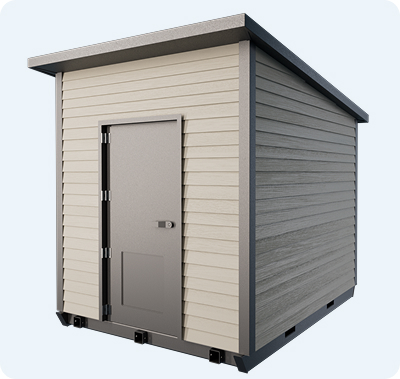
The FORT® approaches the wildfire refuge problem differently. It's an above-ground, purpose-built structure that was designed and engineered by people with decades of experience building life-saving refuge chambers for the mining and tunneling industries. The same core principles that govern below-grade mine refuge chambers, specifically the NIOSH studies and CFR 30 Part 7 regulations for 96-hour duration refuge alternatives, are built into a structure designed for residential wildfire conditions.
The FORT® uses an engineered, positive-pressure air system that maintains oxygen levels between 18.5 and 23 percent and keeps CO2 at 1.0 percent or below during occupancy. That's not a passive system relying on filtered vents. It's a managed air environment, and it's what separates a structure designed for burnover exposure from one that's designed for general emergency shelter.
Construction uses EVG-3D modular panels with flame-resistant precast concrete: non-flammable, tested, and dimensioned at 8 by 10 by 7 feet for a standard unit. Occupancy is up to 8 people, with breathable air for 4 hours. 2 doors, an exterior door rated for high-temperature burnover and a specially engineered interior fire door, provide layered protection.
On the practical side: no excavation, no groundwater exposure, no permits beyond standard local requirements, and inspection access is straightforward. The 30-foot perimeter clearance requirement around the FORT® is consistent with standard defensible space practices. Inspections are scheduled every 6 months through the Wildfire Safety Systems customer portal.
The FORT® is designed as part of a layered wildfire protection plan, sitting alongside defensible space, home hardening, and evacuation planning rather than replacing any of them. For homeowners who want an on-site refuge option that's been tested, maintained to a defined standard, and built around actual wildfire exposure conditions, it's worth a direct conversation.
Learn About the FORT®
Frequently Asked Questions
Key Takeaways
- Underground shelters can provide protection, but soil conditions, water intrusion, and ventilation design determine actual performance
- Passive ventilation systems are not rated for sustained wildfire burnover, and this applies to many off-the-shelf underground products
- "Fire shelter survival rate" depends on exposure duration, heat flux, air system performance, and seal integrity, not shelter type alone
- Installed cost of underground shelters is consistently higher than purchase price suggests
- Permits are required in most US jurisdictions for permanent below-grade structures
- Above-ground, purpose-built refuge structures with engineered air systems address the same threat with fewer site constraints
- Any on-site refuge solution works best as part of a broader plan that includes defensible space, home hardening, and evacuation readiness
Final Thoughts
The question of whether to go underground for wildfire protection is a reasonable one, and the answer isn't simply that underground shelters don't work. Some do, when they're properly engineered, correctly installed, and consistently maintained. The problem is that those conditions are harder to meet than most product listings suggest, and the consequences of falling short aren't always visible until the shelter is put to actual use.
What matters most in any refuge shelter, above or below ground, is the air system, the seal quality, and the maintenance history. A well-maintained above-ground structure with an engineered positive-pressure air supply is a more predictable investment than a below-grade installation with passive ventilation and questionable waterproofing. For homeowners in high-risk areas, the goal is a solution that works reliably within a realistic plan. That means starting with defensible space and evacuation planning, and choosing any refuge option with a clear understanding of what it actually provides.