Table of Contents
- Firebreak vs Fuel Break: What's the Difference?
- When to Use a Firebreak vs a Fuel Break
- How Breaks Work Across a Real Property
- How Breaks Fit the Zone 0–100 Defensible Space Plan
- How to Design and Maintain a Break That Keeps Working
- What to Know About Permits, Neighbors, and Agencies
- Where the FORT Fits on a Property With Breaks
- Frequently Asked Questions
- Key Takeaways
Every property in fire country has a strip of ground the owner isn't sure what to do with. Maybe it's the brushy band between the driveway and the property line. Maybe it's the slope below the house that's easy to ignore until August. The instinct is to clear it, and clearing is usually a good instinct. The harder question is how much to clear, and whether bare ground or thinned vegetation does more for you.
That's the difference between a firebreak and a fuel break, and it's not a technicality. The two do different jobs, cost different amounts of work to keep up, and suit different parts of a property. Pick the wrong one for the terrain and you either spend money on clearing you didn't need or leave a gap in the plan you thought you'd closed. This guide is for property owners in wildfire-prone areas, including anyone managing a larger lot, a ranch, or a vineyard, who wants to make that call with some confidence as one piece of a broader wildfire preparedness plan.
One thing up front, because it shapes everything else. Evacuation is always the safest choice, and leaving early is the goal. Firebreaks and fuel breaks don't change that. What they do is lower the intensity of a fire as it approaches, give firefighters a place to make a stand, and buy the time that makes an early, calm departure possible. They're the outer edge of a plan, and they never make staying behind the safer move.
In Short
A firebreak is a strip cleared down to bare or non-combustible ground, so there's nothing left to burn. A fuel break is a wider band where vegetation is thinned, pruned, and spaced out to reduce fire intensity, not erase it. Most properties need some of both, and the right mix comes down to your slope, your prevailing wind, and where your access roads run. Neither one replaces the near-home work that actually keeps houses standing.
Think of both as layers in a larger plan that also includes home hardening, a defensible-space buffer close to the structure, and a clear evacuation plan you can act on early. For the harder case, where fire moves faster than expected and leaving is no longer possible, an on-site refuge like the FORT® is one more layer, designed to work alongside evacuation planning and home hardening rather than in place of them.
Firebreak vs Fuel Break: What's the Difference?
A firebreak removes fuel completely; a fuel break reduces it. That single distinction drives everything else about how you'd use them.
A firebreak is a gap cleared to bare mineral soil or a non-combustible surface. A dirt road, a gravel band, a rock margin, a paved driveway, a mowed-to-dirt strip. The idea is simple: fire needs fuel to keep moving across the ground, and a firebreak takes the fuel to zero along a line. Firefighters cut them by hand and by dozer during a fire as control lines, and property owners build their own out of driveways, paths, and cleared margins.
A fuel break is wider and less absolute. Instead of stripping the ground, you reduce and rearrange what's growing there. Grass gets mowed low, shrubs get thinned and spaced apart, trees get limbed up so fire can't climb from the ground into the canopy. A fire still moves through a fuel break, but lower and slower, with shorter flames and fewer embers thrown. That drop in intensity is the point. It gives crews a survivable place to work and keeps a fast-moving fire from arriving at full strength.
Here's how the two compare across the things that matter when you're deciding:
| Firebreak | Fuel break | |
|---|---|---|
| What it is | A strip cleared to bare soil or non-combustible surface | A wider band of thinned, pruned, and spaced vegetation |
| How it works | Removes fuel to zero along a line | Lowers fire intensity and slows spread |
| Typical width | Narrow, from a few feet to a couple of vehicle widths | Wide, often tens to hundreds of feet, scaled to slope and fuel |
| Best suited for | Access roads, property lines, control-line anchors | Open hillsides, wooded areas, larger acreage |
| Maintenance load | High along the surface (regrowth, erosion) | Ongoing thinning, mowing, and pruning by season |
| Main limitation | Wind-blown embers cross it easily; narrow lines fail against tall flames | Fire still passes through; effectiveness depends on upkeep |
Read down that table and the pattern is clear. A firebreak is a line; a fuel break is a zone. You'll want lines where you already have them, like roads and driveways, and zones where total clearing isn't practical or would tear up a slope.
When to Use a Firebreak vs a Fuel Break
The choice comes down to three things: how steep the ground is, which way the wind drives fire across it, and where your roads and boundaries already sit. Preference barely enters into it.
Read your terrain and wind corridors first
Fire moves faster uphill, because flames preheat the fuel above them, so a break on a slope has to be wider than the same break on flat ground to do the same work. Wind matters just as much. Most properties have a prevailing direction that fire would come from, often down a canyon, a draw, or a ridge that funnels wind. A break placed across that path earns its keep; the same break placed where fire is unlikely to run does little. Walk your land and picture where a fire would actually come from before you decide where to cut.
Use firebreaks where a line already wants to be
Access roads and driveways are the best firebreaks most people own, because they're already bare and they do double duty as a route for you to leave and for crews to come in. Property lines are another natural place for a cleared strip, especially where your land meets open space or a neighbor's unmanaged brush. A firebreak along a road or boundary is low-effort to maintain because the surface is already there.
Use fuel breaks across open ground you can't strip bare
On a wooded hillside or across acreage, clearing everything to dirt invites erosion and often isn't allowed. A fuel break is the realistic tool: thin the brush, space the trees, mow the grass, and leave a lower, broken-up fuel bed that a fire can't tear through. This is where larger properties do most of their real risk reduction.
Knowing your fire hazard designation helps you prioritize. More on how to check that in the permits section below, since it ties into what you're allowed to do.
How Breaks Work Across a Real Property
On an actual property, firebreaks and fuel breaks show up as specific features you can point to, not abstract strips on a map. Here's where each one tends to land.
Driveways and access roads
A driveway is already a firebreak. Widen the cleared margin on either side, keep it free of overhanging limbs and dry grass, and it becomes a genuine control line that also keeps your escape route open. This is the highest-value, lowest-cost break on most properties, because you maintain the surface anyway.
Property lines and shared boundaries
A cleared or thinned strip along the boundary slows a fire coming off adjacent land and gives you a defined edge to defend. Where the neighbor's side is unmanaged, this strip matters more, not less. It's also the place where coordination pays off, since a break that stops at your fence line is weaker than one that continues onto the next parcel.
Orchards, vineyards, and irrigated blocks
A well-kept vineyard or orchard is already a living fuel break. The rows are green through much of the year, the vegetation is low and widely spaced, and there's little continuous brush to carry fire. Owners of vineyard and ranch properties can lean on this, and should think about defensible space the way estate-scale properties do, treating the planted blocks as part of the fire plan rather than separate from it. Keep the under-row and edges clear of dry weeds and the block keeps working for you.
Any of these can anchor a plan. The trick is connecting them, so your driveway break, boundary strip, and open-ground fuel break form a continuous system rather than disconnected patches.
How Breaks Fit the Zone 0–100 Defensible Space Plan
Breaks and defensible space operate at different scales, and confusing them leaves a dangerous gap. Breaks work out at the perimeter and across the landscape. Defensible space works in the first 100 feet around the house. You need both, and the far one never covers for the near one.
Zone 0, the first 5 feet, is the most important ground on the property
This is the ember-ignition zone right against the structure, and no distant firebreak touches it. California is moving toward requiring it to be kept clear of anything that burns: no bark mulch, no woody plants, no stored firewood, nothing combustible against the walls or under the deck. A firebreak 300 feet away does nothing for a house that catches because an ember landed in the mulch by the front door.
Zones 1 and 2, out to 100 feet, are where fuel-break thinking comes close to home
From 5 to 30 feet you keep things lean, low, and irrigated; from 30 to 100 feet you thin and space vegetation so fire drops out of the canopy and slows down. That's the same logic as a landscape fuel break, applied in the yard.
Embers cross every break, which is why the near-home work matters
Most homes that burn in a wildfire don't ignite from a wall of flame. They ignite from wind-blown embers that land on or around the structure, and embers routinely travel well beyond any firebreak you could build. That's why breaks pair with home hardening and Zone 0 rather than standing in for them. For how those embers actually get into a house, our guide to wind-driven embers that ignite homes is worth a read. California's official defensible-space guidance at CAL FIRE's Ready for Wildfire lays out the zones in detail.
How to Design and Maintain a Break That Keeps Working
An unmaintained break is not a break. Vegetation grows back, bare ground erodes, and a strip you cleared two years ago can be carrying fuel again today. Design matters, but upkeep is what actually protects you.
Width scales with slope and fuel
There's no single correct number. A break that works on flat grassland is undersized on a steep, brushy slope, because fire climbs faster and throws flames farther uphill. General guidance widens the break as the ground steepens and the fuel gets heavier, and CAL FIRE's defensible-space standards are the right reference for the near-home zones. For larger landscape breaks, work with your local fire agency or a fire-safe council rather than guessing, since the right width depends on conditions specific to your land.
Set a maintenance rhythm tied to the season
Grass and weeds do most of their growing in spring, then cure into fine fuel by early summer, so the work lands before fire season, not during it. Mow low, clear the cured growth, prune back what's crept in, and keep any equipment you'll need ready ahead of time. A break maintained on a calendar stays effective; one you tend to only when a fire's in the news usually isn't ready when it counts.
Inspect for quiet regrowth
Breaks fail slowly and invisibly. Shrubs resprout, saplings fill in the gaps between trees, and dead limbs accumulate. Walk your breaks at least once a season and look for the fuel coming back, because the strip that looks fine from the driveway may be closing in where you can't see it.
What to Know About Permits, Neighbors, and Agencies
Clearing vegetation isn't always a do-what-you-want situation, especially at scale or on a slope, and a break that stops at your property line is only half a break. A little coordination up front saves trouble.
Check your fire hazard designation and local rules first
In California, you can look up your property in CAL FIRE's Fire Hazard Severity Zone viewer. Enter your address and it returns your parcel's recommended hazard zone and whether you sit in a Local or State Responsibility Area, which tells you which agency sets the rules for your land. One caveat worth knowing before you rely on it: the viewer shows the state's recommended zones, and the officially adopted zone for your address can differ, so confirm with your local agency.
Watch for grading, erosion, and protected-vegetation rules
Stripping a wide strip to bare dirt on a hillside can trigger grading permits and erosion-control requirements, and many areas protect certain trees, oaks especially, under local ordinances. This is a real reason to favor a fuel break over a firebreak on sensitive ground: reducing fuel is often permitted where total clearing isn't.
Talk to your neighbors and your fire agency about shared breaks
Fire doesn't stop at a fence, and neither should a well-placed break. Where a cleared line or thinned zone would work best continuing across a boundary, a conversation with the neighbor, and sometimes an easement, makes it possible. Your local fire agency or fire-safe council can help plan breaks that connect across parcels, which is far stronger than each owner working alone.
Where the FORT Fits on a Property With Breaks
Firebreaks and fuel breaks reduce how much fire reaches your home and, just as important, buy the time to leave early and calmly. That's their role in the plan, and it's the outer layer of it. The layers closer in are home hardening, defensible space, and an evacuation plan you can act on the moment conditions turn.
Evacuation is always the first and safest choice. No break, and no structure, changes that.
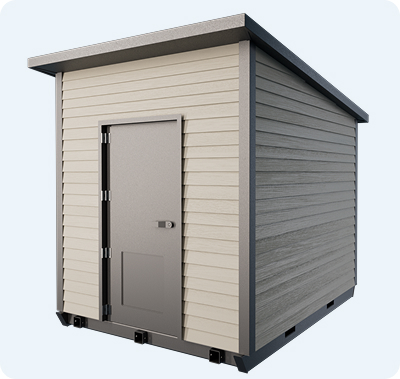
For the harder case, when fire moves faster than anyone expected and the roads are already compromised, an on-site refuge is the layer built for the scenario where leaving is no longer possible. The FORT is an above-ground, engineered refuge designed to work as part of that broader plan, alongside the evacuation planning and home hardening that come first, not as a substitute for any of it. On a property where you've already thought through breaks, access, and defensible space, it fits as one more considered piece of a layered strategy.
Learn About the FORT
Frequently Asked Questions
A firebreak is a strip cleared to bare soil or a non-combustible surface so there's no fuel left to burn, while a fuel break is a wider band where vegetation is thinned and spaced to lower fire intensity without removing it entirely. Firebreaks work as hard lines along roads and boundaries; fuel breaks reduce how fiercely a fire burns as it crosses open ground. Most properties use both.
There's no single correct width, because it scales with slope and the type of fuel. Fire moves faster and throws flames farther uphill, so a firebreak on a steep, brushy slope needs to be considerably wider than one on flat grassland. For the area within 100 feet of a home, follow CAL FIRE's defensible-space standards; for larger landscape breaks, plan the width with your local fire agency rather than relying on a rule of thumb.
Firebreaks slow a fire and lower its intensity, and they give firefighters a control line to work from, but they don't reliably stop a wind-driven wildfire on their own. The reason is embers: wind carries burning material well past any break and lands it on or around homes, which is how most houses ignite. A firebreak is valuable as one layer, paired with home hardening and a clear defensible-space zone close to the structure.
Sometimes, depending on where you live and how much you're clearing. Routine defensible-space maintenance usually doesn't require a permit, but large-scale clearing, grading on slopes, and removing protected trees such as oaks can trigger local permits or erosion-control rules. Check your local fire agency's guidance and your county ordinances before major work, and look up your parcel in CAL FIRE's Fire Hazard Severity Zone viewer so you know which agency governs your land.
No, and this matters: breaks reduce a fire's intensity, but they don't create a safe place for a person to be during a wildfire, and evacuation remains the first and safest choice every time. For the case where evacuation becomes impossible, an on-site refuge like the FORT is the layer designed for that scenario, an above-ground tested refuge meant to work alongside evacuation planning and home hardening, not to replace leaving early.
Key Takeaways
- A firebreak clears fuel to bare ground; a fuel break reduces and spaces fuel without removing it.
- Choose by slope, wind direction, and where your roads and boundaries already run, not by preference.
- Driveways and access roads are the best firebreaks most owners already have.
- Breaks are the perimeter layer; Zone 0 within 5 feet of the house is a separate job no distant break covers.
- Wind-blown embers cross any break, which is why home hardening still matters most.
- A break only works if it's maintained, so tie the upkeep to the season and inspect for regrowth.
- Evacuation is always first; a refuge like the FORT is one layer for the case where leaving isn't possible.
Final Thoughts
The firebreak-versus-fuel-break question doesn't have one answer, and that's the honest takeaway. It has a right answer for each stretch of your property, based on how the ground lies, where fire would come from, and what you're realistically able to maintain. A driveway widened into a firebreak, a thinned fuel break across the back slope, and a genuinely clear Zone 0 around the house do more together than any single dramatic clearing project.
Keep the priorities in order. Reducing fuel and hardening the home make an early, calm evacuation possible, and early evacuation is what keeps people safe. Build the breaks, maintain them, and treat them as part of a layered plan that also includes defensible space and, for the scenario where evacuation isn't possible, an on-site refuge like the FORT. Planned that way, the strip of ground you weren't sure what to do with becomes one of the more useful parts of your whole strategy.