Table of Contents
- What Is a Crown Fire?
- What Causes Crown Fires?
- Active, Passive, and Independent Crown Fire: What the Types Mean
- Why Crown Fires Put Homes at Risk
- How to Reduce Crown-Fire Exposure Around Your Home
- How to Watch Fire Weather and Know When to Leave
- Where the FORT Fits in a Crown-Fire Plan
- Frequently Asked Questions
- Key Takeaways
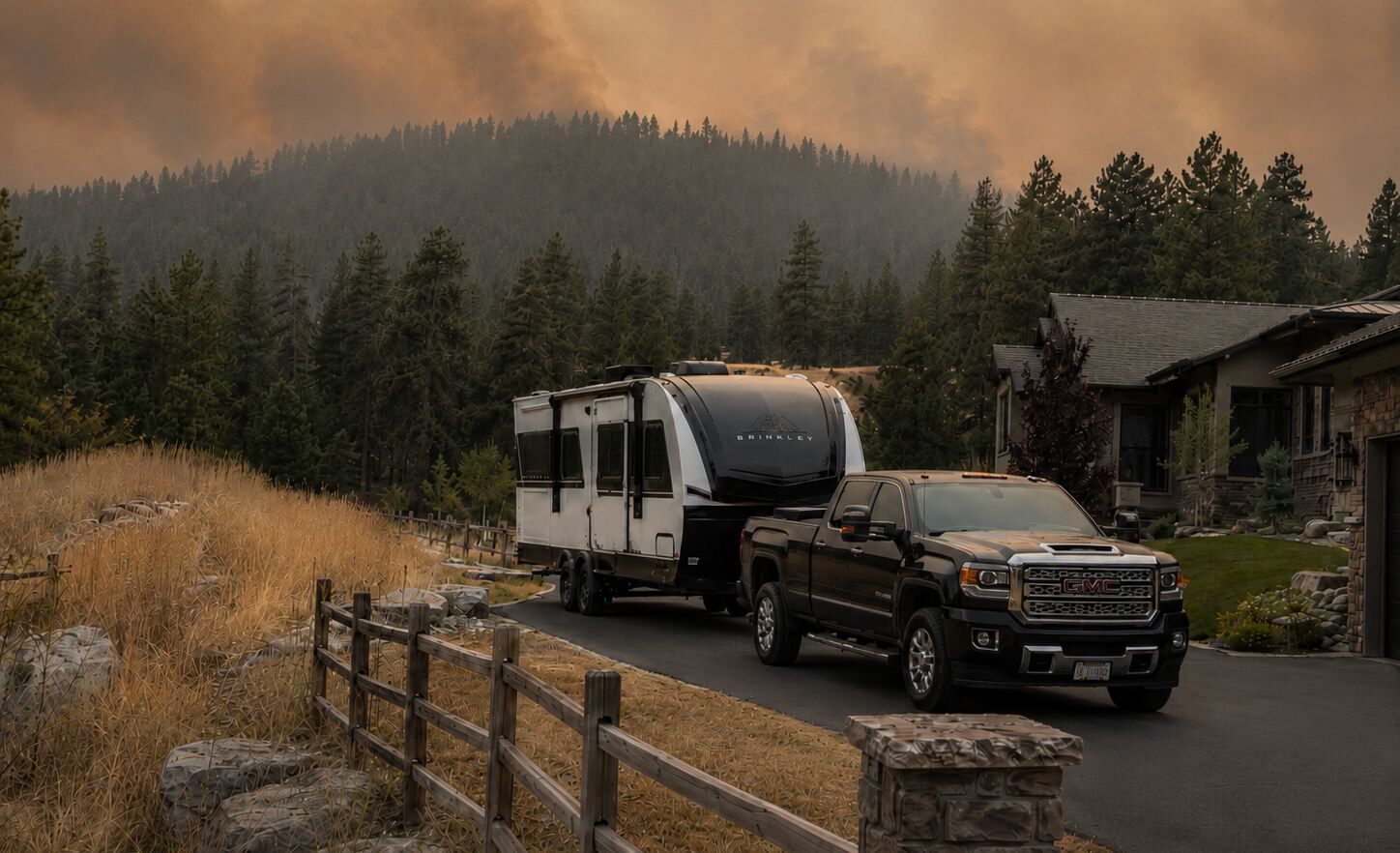
The fire had been crawling through grass and brush for hours, low and slow, the kind of ground fire a crew can dig a line around. Then the afternoon wind came up, the flames found a stand of dry pines, and within minutes the fire was running through the treetops faster than anyone on the ground could move.
That jump from the ground into the canopy is what turns a workable wildfire into a crown fire, and it's the moment that puts homes at risk even when they sit well back from the tree line. This guide is for homeowners in and around wooded, fire-prone country who want to understand how crown fires behave and, more usefully, what they can do about them. It covers what a crown fire is, what causes one, the forms it takes, why it threatens houses from a distance, and the steps that actually lower your risk.
One thing sits above all of it. Evacuation is always the safest choice, and leaving early is always better than leaving late. Everything here about crown fire behavior points back to that same conclusion: understand the conditions so you can be gone before a fire is close enough to make the decision for you.
In Short
A crown fire is a wildfire that spreads through the crowns, the tops, of trees instead of along the ground. It moves faster than a surface fire, throws embers much farther ahead of itself, and is far harder for crews to stop once it gets established.
Most of what protects a home from a crown fire happens long before one arrives: clearing the fuel that lets fire climb, hardening the house against embers, and watching the weather so you can leave early. For the narrow case where a fast-moving fire cuts off the way out, an on-site refuge like the FORT® is one layer of a broader plan. It's never a substitute for evacuating early.
What Is a Crown Fire?
A crown fire is a wildfire that has climbed up off the ground and is spreading through the canopy, the layer of branches and foliage at the tops of the trees. A surface fire burns grass, leaf litter, and low brush. A crown fire burns the trees themselves, and that one difference changes how fast it moves, how far it spreads, and how hard it is to stop.
The Path From the Ground to the Canopy
Getting there follows a path. Almost every crown fire starts as a surface fire on the ground. From there it needs a way up, and that's the job of ladder fuels: shrubs, low tree limbs, small understory trees, and anything else that bridges the gap between the ground and the canopy. When those ladder fuels catch, they carry flame upward like the rungs of a ladder. Once the fire reaches the crowns and finds enough connected canopy to feed on, it's a crown fire. Break a rung in that ladder and the fire has a harder time making the climb. That's the logic behind most of the mitigation later in this guide, and it's the same ground-to-canopy progression covered in how forest fires start and spread.
What Causes Crown Fires?
Crown fires happen when 3 conditions line up: fuel that runs continuously from the ground into the canopy, dry vegetation, and enough wind or slope to drive flame upward and forward. Take away any one of them and a fire is far more likely to stay on the ground where crews can fight it.
Wind does the most work. It tilts flames into unburned fuel, pushes heat out ahead of the fire, and carries burning embers up into the canopy and beyond. Slope behaves a lot like wind, because fire climbing uphill preheats the vegetation above it, so a fire on a steep canyon wall can crown when the same fire on flat ground wouldn't. Then there's the state of the fuel. Drought and a long dry season pull moisture out of leaves, needles, and limbs, and dry fuel ignites faster and burns hotter. Low relative humidity does the same thing on a shorter timescale, which is why fire danger spikes on hot, dry, windy afternoons. Dense, continuous canopy is the last piece: trees grown into each other hand a fire an unbroken path to travel, while real gaps between crowns force it to stop and start.
If you're weighing which of these you can actually influence, fuel is the answer. You can't change the wind or the pitch of your land. You can change how much fuel connects the ground to the treetops, and how tightly the canopy grows together.
Active, Passive, and Independent Crown Fire: What the Types Mean
Crown fires come in 3 forms, and the difference between them comes down to how much each one still leans on the fire burning on the ground below it. Fire scientists have sorted them this way since Van Wagner's foundational research in the 1970s, and the categories still hold up. The National Wildfire Coordinating Group keeps the standard definitions.
A passive crown fire, often called torching, is the mildest of the three. Individual trees or small clumps flare up as the surface fire reaches them, throwing flame and embers into the air, but the crowning is intermittent and still driven by the fire on the ground. Torching is often the warning that conditions are turning.
An active crown fire, sometimes called a running crown fire, is what most people picture when they hear the term. The surface fire and the canopy fire advance together as a single front, each one feeding the other. It produces heavy ember cast and moves fast, and it's both the most common form and the most dangerous for any home in its path.
An independent crown fire is the rare extreme. Here the fire races through the canopy ahead of and apart from the surface fire, driven by ferocious wind or a steep slope, and it can outrun the ground fire entirely. These are short-lived and unusual. When one does happen, conditions are about as bad as wildfire gets.
The table lays the three side by side.
| Type | How it spreads | What drives it | What it means for a homeowner |
|---|---|---|---|
| Passive (torching) | Single trees or clumps flare up; crowning is on and off | Still tied to the surface fire below | Spot ignitions and rising ember cast; a sign conditions are worsening |
| Active (running) | A continuous front through canopy and surface together | Surface and canopy fire feeding each other | Fast, heavy ember production; the dangerous form people picture |
| Independent | Through the canopy ahead of and apart from the surface fire | Extreme wind and/or steep slope; rare | Unpredictable, can outrun the ground fire; worst-case conditions |
Why Crown Fires Put Homes at Risk
The greatest danger a crown fire poses to a house is usually the embers it throws a mile or more ahead of itself, well before the flames get anywhere close. A house set well back from any tree line can still burn if it sits downwind of a crown fire that's casting embers.
When a fire burns through the canopy, it lofts burning bits of bark, needles, and branches high into the wind. These embers, also called firebrands, ride the wind ahead of the fire and shower down on whatever lies in their path. This is called spotting, and it's how a crown fire jumps highways, rivers, and cleared land, and how it starts fresh fires far from the main front.
Once embers land, they look for somewhere to catch, and the vulnerable spots on most homes are predictable: dry leaves in gutters and roof valleys, attic and crawlspace vents that let embers indoors, wood decks and fences joined to the structure, patio cushions, doormats, and mulch pushed up against the walls. A single ember in the wrong spot can smolder quietly and then ignite the house hours after the fire front has passed. The full mechanics of how this happens, and how to shut it down, are in how flying embers ignite homes.
There's a timing lesson buried in this. Because embers arrive ahead of the fire, waiting until you can see flames before you leave means waiting too long. By then the air is full of embers and the roads out may already be filling up.
How to Reduce Crown-Fire Exposure Around Your Home
You can't stop a crown fire, but you can make your property a poor place for one to land, catch, and spread. The work splits cleanly in two: managing the fuel around the house, and hardening the house itself.
Break Up the Fuel Ladder
Start with the fuel ladder, since that's what let a fire reach the canopy in the first place. Limb up your trees so the lowest branches sit 6 to 10 feet off the ground, which pulls out the lower rungs a surface fire would climb. Thin dense stands so tree crowns aren't touching, which denies fire a continuous path overhead. Clear the shrubs and dead growth underneath, especially anything growing right below a tree. And treat the first 5 feet around the house as a no-fuel zone, sometimes called Zone 0: no wood mulch, no shrubs against the walls, nothing that will hand flame to the structure. Defensible space builds outward from there in zones, and there's a full estate-scale walkthrough in defensible space around the property. On larger lots, a firebreak or fuel break, a strip of cleared or thinned land that slows a fire's advance, can add another layer of protection.
Harden the Home's Envelope
The second half of the job is the house. In a wildfire, embers ignite most homes, so the goal is to give them nowhere to get in and nothing to catch. A Class A fire-rated roof is the single most important piece, because the roof is the largest ember target on any house. Cover attic and foundation vents with 1/8-inch metal mesh, which keeps embers out while the house still breathes. Enclose open eaves and the undersides of decks. Use noncombustible materials in that first 5 feet against the walls, and keep the gutters clear through the season. Retrofitting an existing home for all this is its own project, and home hardening retrofits covers how to prioritize the work by what protects the house most.
How to Watch Fire Weather and Know When to Leave
The conditions that turn a surface fire into a crown fire show up in the forecast, so the households that come through a bad fire day calmly are usually the ones who saw it coming and left early. Watching fire weather is a habit worth building before the season starts, not during it.
The clearest signal is a Red Flag Warning, issued by the National Weather Service when hot temperatures, very low humidity, and strong winds combine into dangerous fire conditions. When one is in effect for your area, treat it as the day to be ready to move: vehicles fueled or charged and pointed out toward the road, go-bags by the door, and a plan everyone in the house already knows. A fuller checklist for getting a household ready lives in how to prepare for a wildfire.
Two free tools are worth knowing. The National Weather Service Storm Prediction Center publishes Fire Weather Outlooks that map where the country is under Elevated, Critical, or Extreme fire-weather risk a day or more out. It's a regional forecast view rather than an address lookup, but it tells you when your part of the state is heading into a dangerous stretch. For tracking an actual fire once one starts, Watch Duty, a nonprofit app and website, shows active fires near you in real time with acreage, containment, and evacuation updates, and you can search it by address or place.
All of this feeds one decision: when to leave. A crown fire can move faster than you can drive on a smoke-choked canyon road behind everyone else trying to get out, so the plan is always to be gone before it's close, not to watch it and judge the moment. If officials issue an evacuation warning or order, go. If your read on the conditions says leave even before an order comes, trust it.
Where the FORT Fits in a Crown-Fire Plan
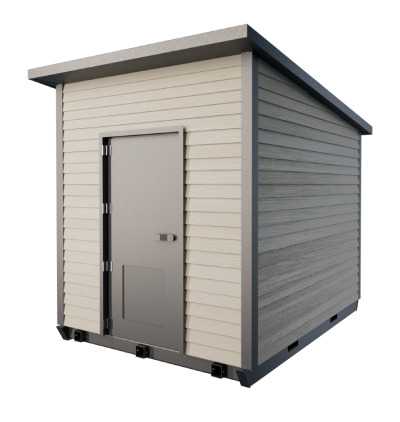
Even a well-prepared household can meet the situation every plan is built to avoid: a fire moving so fast that the roads out are already cut off. That's the narrow case the FORT is made for, as one layer of a layered plan. It is never a stand-in for getting out.
The FORT is an above-ground refuge engineered specifically for wildfire conditions. It's built to withstand the intense radiant heat of a fire burning over a property, and it uses a managed air system to hold breathable air inside while smoke and superheated gases stay out. It's a tested refuge, designed to protect people for the time it takes a fire front to pass when leaving is no longer possible.
It works only as part of a bigger plan, and the order of that plan never changes: harden the home, keep defensible space, watch the weather, and evacuate early. An on-site refuge earns its place as one layer of that plan, for the specific case where a fast-moving fire has cut off the routes out and evacuation isn't possible. Framed that way, the FORT is a planned part of a preparedness strategy for a high-risk property. It is never an alternative to leaving.
Learn About the FORT
Frequently Asked Questions
A crown fire is a wildfire that spreads through the crowns, or tops, of trees rather than along the ground. It moves faster than a surface fire and throws embers much farther, which makes it both harder to control and more dangerous to homes in its path. Most crown fires begin as surface fires that climb into the canopy by way of ladder fuels like shrubs and low branches, the same progression covered in how forest fires start.
Crown fires are caused by 3 conditions occurring together: a continuous path of fuel from the ground into the tree canopy, dry vegetation, and wind or steep terrain to drive the flames upward. Drought and low humidity make fuels more flammable, while wind and slope push a surface fire up into the crowns. Of these, the fuel connecting the ground to the canopy is the one a homeowner can most directly reduce through defensible space.
An active crown fire and an independent crown fire differ in how much they rely on the fire burning on the ground below. An active, or running, crown fire moves through the canopy and the surface together as one front, each feeding the other, and it's the most common dangerous form. An independent crown fire spreads through the canopy ahead of and apart from the surface fire, driven by extreme wind or slope, and it's rare and short-lived. A third form, passive crown fire or torching, is when individual trees flare up on and off. The National Wildfire Coordinating Group keeps the formal definitions.
Firefighters can rarely halt an active crown fire with a direct attack, because the heat, speed, and ember cast make it too dangerous to get close. Crews instead fall back to defensible ground like roads, rivers, and cleared breaks, working to steer the fire and protect structures rather than stop it head-on. This is why the work a homeowner does in advance matters so much: by the time a crown fire arrives, the condition of the property, from defensible space to home hardening, is largely what decides whether the house survives.
Evacuation is always the safest option, and the goal is always to leave early, before a fire is close. For the rare case where a fast-moving fire has cut off every route out, an on-site refuge engineered for wildfire can provide a protected, breathable space while the fire front passes. The FORT is one such option, an above-ground tested refuge designed to work as one layer of a broader plan that still puts evacuation first. It isn't a substitute for leaving, and no refuge can promise safety in every scenario.
Key Takeaways
- A crown fire spreads through the treetops rather than along the ground, and moves much faster than a surface fire
- Crown fires need connected fuel, dry conditions, and wind or slope; fuel is the part you can control
- The 3 types, passive, active, and independent, differ by how much they still depend on the surface fire
- Embers thrown a mile ahead are the main threat to homes, arriving well before the flame front
- Break up the fuel ladder and harden the home's envelope to cut your risk the most
- Watch fire weather, act on Red Flag Warnings, and leave early; evacuation is always the safest choice
- An on-site refuge is one layer for when evacuation isn't possible, not a replacement for leaving
Final Thoughts
Crown fire is the version of wildfire that gives people the least time and the fewest options, which is exactly why the useful response to it is the unglamorous work done long before one shows up. Clear the fuel that lets fire climb. Harden the house against the embers that arrive first. Watch the forecast, and leave early when the conditions turn. Do those things and you've met the crown-fire threat where it can actually be met, well ahead of the fire itself.
For the high-risk property where evacuation can still fail despite good planning, the FORT adds a further layer of protection, one built for the moment when getting out is no longer possible. The priority never changes: the safest choice is always to be somewhere else before the fire arrives.