
Table of Contents
- How Long Do Wildfires Last?
- What Contained, Controlled, and Out Actually Mean
- Why Some Fires Burn for Months
- Why a Fire Keeps Smoldering After the Flames Are Gone
- How Long Did the Longest Wildfire Last?
- How to Track a Fire's Duration Yourself
- What Months of Fire Means for Your Household
- Where the FORT Fits in a Long-Duration Fire
- Frequently Asked Questions
- Key Takeaways
The Plaskett Fire started on a Wednesday morning in late August, in steep country east of Plaskett in Monterey County. Three weeks later, crews had it at 97% contained and expected no further spread. It still wasn't out.
A wildfire can remain active for weeks after crews contain most of its perimeter. A fire can be surrounded, quiet, off the evening news, and still be burning in pockets inside its own perimeter for weeks. The number you see published is a containment figure, and containment answers a question about the line around the fire rather than a question about the fire itself.
If you're watching a fire near your property and trying to work out when normal life resumes, that distinction matters more than the acreage. This guide covers what contained, controlled and out each actually mean, what stretches a fire into a months-long incident, how long the longest fires on record ran, and how to check the duration of a fire burning near you right now.
In Short
Most wildfires are controlled within a day of ignition. The large fires that make the news usually run somewhere between two weeks and three months before crews close the perimeter, and often weeks longer before anyone declares the fire out. Every published duration figure is a containment clock, and 100% contained doesn't mean extinguished.
Evacuation is always the safest option, and leaving early on the first warning is the plan. A long fire means more warnings across more weeks, not fewer. For the case where evacuation becomes impossible, the FORT® is an on-site refuge option within a broader preparedness strategy, designed to work alongside evacuation planning and home hardening.
How Long Do Wildfires Last?
Most wildfires last less than a day. Wildfires that burn for months make up only a small fraction of total ignitions. Crews catch the overwhelming majority of fires while they're still small, and those never get a name in the news or a duration anyone tracks. The fires that run long are the ones that got established in heavy fuel, on terrain crews can't easily reach, during weather that kept pushing them.
California's active incident list on September 17, 2026 showed the spread clearly. The Davis Fire in Stanislaus County started that afternoon at 10 acres and was already 100% contained. The Timber Fire in Monterey County started on August 8 and was 44% contained six weeks later. Same state, same week, two fires with nothing in common but the word.
Published wildfire duration usually refers to the time from ignition to full containment. It starts at ignition and stops when crews close the line around the perimeter. It says nothing about whether anything is still burning inside that line, which it usually is. Knowing what started it tells you something about how a fire behaved early, but not about how long it takes to finish.
What Contained, Controlled, and Out Actually Mean
Contained, controlled and out describe different stages of a wildfire. A fire is considered out when all observable combustion has stopped and there is no risk of it becoming active again. Fire agencies use these terms precisely. Most news coverage uses only the first one, which is how a reader ends up thinking a contained fire is a finished fire.
| Status | What it means | What's still burning | What it means for you |
|---|---|---|---|
| Contained | Crews have completed a control line around the fire and any spot fires, and that line can reasonably be expected to stop the spread | Everything inside the line | Growth is unlikely, but the fire is active and evacuation orders may stay in place |
| Controlled | The line is finished and secured. Crews have burned out the unburned fuel next to it and cooled the hot spots that threaten it | Interior fuel, away from the line | Closures start lifting and crews shift to mop-up and repair work |
| Out | All observable combustion has stopped and the fire cannot become active again | Nothing | The incident is over |
These definitions come from the NWCG Glossary of Wildland Fire, the reference fire agencies work from.
Weeks or months can pass between 100% containment and a fire being declared out, and on large fires it's usually the arrival of sustained fall rain that finishes the job rather than a final push from crews. If you want the mechanics of how those perimeter lines get built and why some hold better than others, that's its own subject.
Why Some Fires Burn for Months
Four main factors can keep a wildfire burning for months: fuel, terrain, weather and fire size.
- Fuel type and load. Grass burns fast and leaves little behind. Heavy timber and deep duff, the layer of packed needles and decayed litter on a forest floor, hold heat for weeks after the flame front has moved on. A fire in timber creates a slow, smoldering problem that a grass fire simply doesn't.
- Terrain and access. The Plaskett Fire's own incident report names the limiting factor directly: steep, nearly inaccessible terrain on all but the extreme east side. Crews can't build line where they can't safely stand, and aircraft can slow a fire but can't put one out. Country that takes a crew four hours to reach gets four fewer hours of work per shift.
- Weather windows. Crews need humidity recovery overnight and light winds during the day to work line safely. Fire weather that runs hot, dry and windy for a week erases progress faster than crews can make it, and the fire waits out the suppression effort rather than the other way around.
- Perimeter size. A 30,000-acre fire has tens of miles of line to build, hold, mop up and patrol. Each mile has to be secured, and a single unsecured stretch during a wind event can restart the whole sequence. Large fires that make big runs through the canopy grow their perimeter faster than any crew can build line around it.
Why a Fire Keeps Smoldering After the Flames Are Gone
A wildfire can continue smoldering underground or inside burned material for weeks after visible flames are gone. The work at this stage is called mop-up: gridding the burned area by hand, finding heat sources, and extinguishing them one at a time. Infrared mapping flights and drones locate the hot spots that patrols can't see from the ground.
Unburned islands inside the perimeter also keep consuming. The Plaskett Fire's September updates describe exactly this, interior pockets backing, creeping and smoldering, producing visible smoke with no perimeter growth at all. Smoke on the horizon three weeks after a fire stopped moving usually means mop-up, not a new run.
The extreme version of this is a holdover fire, sometimes called an overwintering fire. Research led by Rebecca Scholten documented fires in boreal Alaska and Canada that smoldered in deep peat beneath the snow through an entire winter, survived temperatures of 40 below, and re-emerged as new fires in spring.
That's a boreal phenomenon tied to deep peat soils, and it accounts for roughly 1% of burned area in those regions on average. It isn't a California pattern, and a Napa or Sonoma property owner shouldn't expect a fire to overwinter underground. What does happen in California is residual smoldering in duff, stumps and root systems for weeks after containment. Same physics, much shorter clock.
How Long Did the Longest Wildfire Last?
There is no single official record for the longest wildfire. Fire duration can be measured by containment, control or the date the fire is declared out. Containment duration is the figure that's consistently recorded, so that's the one worth comparing.
The Dixie Fire (2021) started on July 13, 2021 at 5:15 PM and reached full containment on October 25, 2021 at 7:45 AM. That's 104 days, across 963,309 acres in the northern Sierra, as recorded on CAL FIRE's incident page for the fire.
The August Complex (2020) started on August 16, 2020 and was reported 100% contained on November 12, 2020. That's 88 days, across 1,032,648 acres, still the largest fire in California's recorded history.
The Plaskett Fire (2026) started August 26 with an estimated containment date of October 1, which works out to roughly 36 days for a fire around 30,000 acres. That last one is the useful corrective. You don't need a million-acre fire to get a month-long incident. You need steep ground and heavy fuel, and California has both in quantity.
Fall weather helped bring these fires to an end.
How to Track a Fire's Duration Yourself
- CAL FIRE's incident list covers California and shows every wildfire over 10 acres with its start date, current acreage and containment percentage in a single table. Click any incident and you get a page with the exact date and time it started, when the information was last updated, and a dated log of every operational update. It's a browsable list rather than an address lookup, so you find your fire by name or county.
- InciWeb covers incidents nationally, and its incident pages carry the field you actually want: an estimated containment date, alongside date of origin and percent of perimeter contained. Search by incident name or state. If you only check one thing during a long fire, check this.
- NASA's FIRMS US/Canada map shows satellite heat detections and an active fire perimeter layer over the last 24 hours, 7 days, or a date range you set. It's the tool that shows you where a fire is still producing heat after containment. Fair warning, it's built for fire managers rather than homeowners, and NASA labels the data explicitly as unsuitable for decisions about protecting life or property. Treat it as a view from orbit, not as an alert system.
For real-time alerts about a fire near you right now, which is a different job than tracking duration, use a real-time alerting source instead.
What Months of Fire Means for Your Household
A wildfire can disrupt daily life for weeks after the flames stop spreading. Planning for a three-week incident looks different from planning for a three-day one, and most household preparation is built around the short version.
Smoke is the most persistent problem. A fire that smolders through mop-up can push smoke into surrounding valleys for weeks after the perimeter stops moving, and air quality on any given day depends more on wind direction than on how far away the fire is. Checking smoke conditions is a daily habit during a long incident, not a one-time check.
Access is the second. Highway closures, utility shutoffs and restricted local roads can persist well past the point where the fire looks finished, because suppression repair crews and heavy equipment are still working those roads. Insurance documentation is the third, and an extended incident gives you time to do it properly. Photograph the property and inventory what's in it before conditions deteriorate, not after.
Long incidents can also lead to decision fatigue. A fire that runs six weeks can generate several rounds of evacuation warnings, and each round makes the next one easier to shrug off. Evacuation is always the safest option, and the plan is to leave early on the first warning every time, including the fourth time. Keep vehicles fueled or charged and your go-bag staged for the duration of the incident rather than repacking it each round. A written evacuation checklist matters more during a long fire than a short one, precisely because you'll be running it repeatedly. Broader wildfire preparedness planning covers what to have in place before any of this starts.
Where the FORT Fits in a Long-Duration Fire
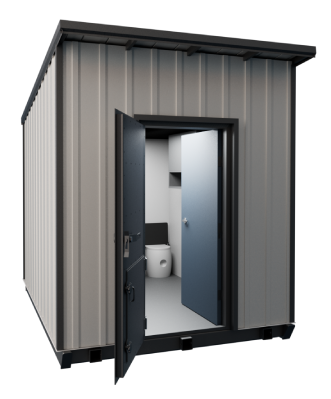
A wildfire that remains active for weeks can create repeated road closures, evacuation warnings and sudden changes in fire behavior. The longer a wildfire remains active nearby, the more chances there are for roads to close or conditions to change before a household can evacuate.
The FORT is an above-ground, tested refuge engineered for wildfire conditions. It works as one layer of a broader wildfire protection plan, designed to work alongside evacuation planning and home hardening. It isn't a substitute for leaving, and it doesn't change the answer to the question of what you should do when a warning is issued. You should go.
An on-site refuge provides another layer of protection if evacuation becomes impossible. A solution like the FORT can protect both the people and belongings that matter most even if your home burns. Full details of how the FORT has been tested, including burnover conditions, are published on the safety and testing page.
Learn About the FORT
Frequently Asked Questions
Most wildfires are controlled within 24 hours of ignition, because crews catch the large majority of fires while they're still small. Large fires in steep or remote terrain are the exception, and those typically run between two weeks and three months before reaching full containment. Duration tracks fuel type, terrain access and fire weather far more closely than it tracks acreage.
A wildfire at 100% containment is still burning. Containment means crews have completed a control line around the fire and any spot fires, and that line can reasonably be expected to stop the spread. The interior keeps burning, and a contained fire can smolder inside its own lines for weeks. A fire is declared out later, once all observable combustion has stopped and there is no risk of it becoming active again. The lines that create containment are built to stop the fire from spreading, and crews extinguish what is inside them during mop-up.
Crews stay on a contained fire to mop up residual heat, patrol the perimeter and repair suppression damage. Mop-up means gridding the burned area to find and extinguish hot spots that could reignite, often located using infrared mapping flights. Suppression repair restores the roads, drainages and firelines that the suppression effort itself tore up, which is work that continues for weeks. The NWCG Glossary of Wildland Fire sets out how agencies define each stage.
A contained wildfire can restart, because heat held in deep duff, stumps and root systems survives long after the flames are gone. Wind can carry an ember from that residual heat across a containment line. Once a fire is declared out, all observable combustion has stopped and it cannot become active again. In boreal Alaska and Canada, holdover fires have been documented smoldering in peat through an entire winter and re-emerging in spring. That happens in deep northern peat soils. In California, residual heat in duff and root systems lasts weeks.
Evacuation is always the safest option, and the goal is to leave early on the first warning. A long fire creates more moments when that isn't possible, because extended incidents mean repeated road closures and sudden changes in fire behavior over weeks rather than days. The FORT is one option, an above-ground tested refuge with heat resistance and a breathable-air system, designed to work as one layer of a broader plan that still prioritizes evacuation.
Key Takeaways
- Most wildfires are controlled in under a day. The long ones are a small fraction of all ignitions.
- Published duration figures are containment clocks, and containment measures the line, not the fire.
- Contained, controlled and out are three milestones reached weeks or months apart.
- Fuel load, terrain access, weather windows and perimeter size are what stretch a fire into months.
- The Dixie Fire ran 104 days to containment. The August Complex ran 88.
- InciWeb's estimated containment date is the fastest answer to "when will this end."
- A long fire means repeated evacuation warnings, and the plan is to leave early on every one.
Final Thoughts
For homeowners near a wildfire, the practical question is how long the fire will affect daily life. Containment is the milestone that gets reported, but the one that matters at home arrives later, when the smoke clears, the roads reopen and the last hot spot goes cold.
Plan for the long version. A property in steep, heavily fueled country should be prepared for an incident measured in weeks, with evacuation routes reviewed, documentation done early, and a household that treats the fourth warning as seriously as the first. For the days when leaving isn't possible, the FORT is one layer of that plan, sitting alongside the evacuation planning and home hardening that come first.