
Table of Contents
- What Starts Most Wildfires? Human vs. Natural Causes
- What Are the Top Human Causes of Wildfires?
- What Causes Wildfires to Start Naturally?
- How Does a Small Ignition Become a Wildfire?
- How to Prevent Wildfire Ignitions Around Your Home
- Where the FORT Fits When Wildfire Reaches Your Property
- Frequently Asked Questions
- Key Takeaways
A trailer chain rides a few inches too low on a dry September afternoon, scraping the shoulder of a rural road and throwing sparks into cured grass. The wind is up. Within minutes a fire is running uphill toward homes. The cause was mundane: a dragging chain, dry fuel, and a gusty day.
Most wildfires start in ordinary moments like that one. This guide is for homeowners in fire-prone areas who want a clear answer to a question that sounds simple: how do wildfires actually start? We'll walk through the human causes, the natural ones, how a single spark grows into a fast-moving fire, and the steps that cut your risk.
Here's why the answer is worth your time. If you know what starts wildfires, you know what you can prevent, and a surprising amount of it sits within your control.
In Short
In the United States, people start most wildfires. Nearly 85 percent trace back to human activity, from equipment sparks and power lines to escaped debris burns and unattended campfires, according to the National Park Service. Nature causes the rest, almost all of it lightning.
Once a fire starts, wind and dry fuel decide how far it runs, and wind-blown embers can carry it to homes well beyond the flames. Evacuating early is always the safest choice. For the narrow case when leaving isn't possible, the FORT® is one layer of a broader wildfire protection plan, never a replacement for evacuation.
What Starts Most Wildfires? Human vs. Natural Causes
People cause the clear majority of wildfires in the US. The National Park Service puts it at nearly 85 percent from human activity, and a 30-year analysis of federal ignition records lands in the same place, near 85 percent once fires of unknown cause are set aside. Lightning accounts for most of what's left. For a closer look at the drivers, see our guide on what causes wildfires.
That split matters for one practical reason. Human-caused ignitions are the preventable ones. They happen where people are: along roads, under power lines, in yards, at campsites. Lightning strikes where it strikes, often in remote country, and no one can stop it. So when you ask how wildfires start, the honest answer is that most start with us, and most of those were avoidable.
A second pattern is worth knowing. Human-started fires tend to ignite close to where people live, which is exactly where they threaten homes. Lightning fires often start far from development. That's part of why human-caused fires do outsized damage to communities, even though lightning fires can grow large in the backcountry.
What Are the Top Human Causes of Wildfires?
The leading human causes are a short, familiar list, and open burning and equipment sit at the top. Here's what actually sparks fires.
Equipment and machinery sparks
Equipment and vehicles account for more than 216,000 wildfire ignitions in the federal record since 1992, and the trend is edging up. A mower blade striking a rock, a grinder throwing sparks, a chainsaw, an overheated brake, a chain dragging behind a trailer: any of these can drop hot metal into dry grass. The fix is timing and maintenance. Hold off on mowing, grinding, or cutting on hot, dry, windy afternoons, and keep spark arrestors in working order.
Power lines and electrical infrastructure
Power lines are one of the fastest-growing ignition sources in the country. In the early 1990s, utilities reported roughly 200 power-line ignitions a year. Recently that figure has reached about 2,500, a 13-fold jump, according to Headwaters Economics. Lines arc, contact vegetation, or fall in high winds, which is why utilities now shut power off during dangerous fire weather. You can't rewire the grid, but you can report downed or sparking lines the moment you see them and take utility outage warnings seriously.
Debris and yard-waste burning
Debris burning starts more wildfires than any other single human cause. A burn pile that looks dead can reignite, and embers escape on wind. Check your county's burn-permit rules and current burn-ban status before you light anything, keep water and a shovel within reach, never burn on a windy day, and drown the ashes until they're cold to the touch.
Campfires and recreational fire
Unattended and poorly extinguished campfires are a leading recreational cause. A fire that looks out can hold heat in the coals for hours. Drown it, stir it, and drown it again until there's no steam and no warmth left.
Fireworks
Fireworks start fires every summer, and dry vegetation plus a stray spark is all it takes. In fire-prone areas during peak season, skip consumer fireworks and leave the show to professional displays. Our fireworks safety checklist covers the details.
Vehicles, cigarettes, and arson
The rest of the human causes round out the picture. Vehicle exhaust and dragging parts ignite roadside grass, discarded cigarettes still start fires though far fewer than they once did, and arson, while down sharply over the past 20 years, hasn't disappeared. None of these is exotic. Each comes down to a spark meeting dry fuel.
What Causes Wildfires to Start Naturally?
Lightning causes almost every natural wildfire. It's behind the bulk of the roughly 15 percent of US wildfires that people don't start. The dangerous version is the dry thunderstorm, where rain evaporates in hot, dry air before it reaches the ground, so the lightning arrives without the downpour that would put a fire out.
Lightning fires often burn larger and longer than their share of ignitions suggests. They tend to strike remote, rugged terrain where crews take longer to reach them, and a single storm can start dozens of fires at once across a mountain range. By the time anyone spots them, they've had a head start. If you want the deeper breakdown of ignition sources, our guide on how forest fires start covers the human and natural split in more detail.
Other natural ignitions barely register. Volcanic activity and, rarely, spontaneous combustion in decomposing material can start fires, but in the US they're a rounding error next to lightning.
How Does a Small Ignition Become a Wildfire?
Ignition is only the first moment of a wildfire. Whether a spark dies or grows into a fire that threatens homes comes down to wind, dry fuel, and terrain.
A fire usually starts at the surface, burning grass, leaves, and low brush. When ladder fuels stand nearby, low branches, shrubs, and small trees, the fire climbs. Once it reaches the canopy it becomes a crown fire, moving treetop to treetop, and those are the fast, intense fires that outrun crews.
The part that catches homeowners off guard is spotting. Wind lifts burning embers and carries them ahead of the fire front, sometimes more than a mile, where they land on roofs, in gutters, and against fences and start fresh fires. This is how a wildfire reaches a home while the flames are still far away, and it's why an ignition miles from your property is still your problem. Wind-blown embers cause the majority of homes lost in wildfires, so hardening your house against them, from screened vents to a clear zone against the walls, protects it more than almost anything else.
How to Prevent Wildfire Ignitions Around Your Home
Because most wildfires are human-caused and start close to home, most are preventable, and a handful of habits do the heavy lifting. Prevention works at two scales: your property and your neighborhood.
On your own property, time your equipment use for cool, calm mornings instead of hot, windy afternoons, and keep spark arrestors and mower blades in good shape. Follow burn-permit and burn-ban rules to the letter, and never burn debris on a windy day. Skip consumer fireworks in fire season. Keep the first 5 feet around your house clear of anything that ignites easily, and clean out embers' favorite landing spots: gutters, roof valleys, and deck corners. Keep your vehicle fueled or charged ahead of fire season too, so an evacuation order never catches you needing to stop for a fill-up. Our overview of wildfire prevention pulls these property steps together.
At the neighborhood scale, prevention compounds. Coordinate with neighbors through a Firewise-style effort, report downed or arcing power lines the moment you see them, and treat red-flag warning days as a reason to hold off on any spark-producing work. One cleared property helps. A whole street of them changes how a fire moves. For a fuller readiness plan beyond ignition prevention, our guide on how to prepare for a wildfire covers alerts, go-bags, and evacuation routes.
Where the FORT Fits When Wildfire Reaches Your Property
Evacuating early is always the safest choice in a wildfire, and it belongs at the center of every household's plan. Leave when officials say to leave, or sooner. No structure changes that.
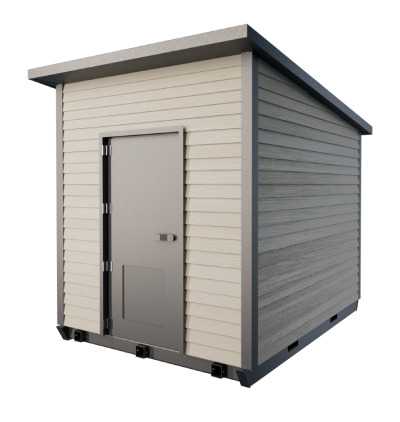
But some situations take evacuation off the table. Roads close, fire moves faster than forecast, or an order arrives too late to act on. The FORT is built for that narrow case. It's an above-ground, on-site refuge engineered specifically for wildfire conditions, tested to withstand up to 2,000 degrees Fahrenheit burnover conditions, with a managed air system that keeps the air breathable and a sealed structure that limits smoke and heat intrusion.
The FORT works as one layer of a broader wildfire protection plan, alongside defensible space, home hardening, and a solid evacuation plan. It doesn't replace any of them, and it can't remove wildfire risk on its own. Think of it as the backstop for the worst-case moment, so a family with a good plan still has somewhere to go if the plan runs out of room. Many owners also use it to store irreplaceable documents and valuables, which makes it easier to leave early knowing those items are protected.
Learn About the FORT
Frequently Asked Questions
Human activity is the leading cause of wildfires, responsible for nearly 85 percent of them in the United States, according to the National Park Service. Debris and open burning start more than any other single human cause, followed by equipment and vehicles, power lines, campfires, and fireworks.
Humans cause nearly 85 percent of wildfires in the United States, and lightning is responsible for most of the rest. That figure holds steady across federal ignition records spanning the last 30 years.
Power lines start wildfires when they arc, contact vegetation, or fall in high winds and drop live current into dry fuel. Power-line ignitions have grown roughly 13-fold since the early 1990s, which is why many utilities now cut power during extreme fire weather.
Yes, wildfires can start naturally, and lightning causes almost all of them. Dry thunderstorms carry the most risk, because the rain evaporates before it reaches the ground and leaves the lightning without anything to douse the fire it starts. Our guide on how forest fires start breaks down the natural and human causes in more detail.
Yes, a wildfire that starts miles away can still reach your home through wind-blown embers, which can travel more than a mile ahead of the flames and ignite roofs, gutters, and fences. Evacuating early is always the safest response. For the case where evacuation becomes impossible, an on-site refuge engineered for wildfire, like the FORT, provides a tested, protected space as one layer of a broader plan that still puts evacuation first.
Key Takeaways
- People start nearly 85 percent of US wildfires; lightning causes most of the rest.
- Debris burning, equipment, and power lines are the top human ignition sources.
- Power-line ignitions have grown about 13-fold since the early 1990s.
- Wind, dry fuel, and terrain, not the spark alone, decide how far a fire spreads.
- Wind-blown embers can travel over a mile and start fires right at your home.
- Most ignitions are human and local, which makes most of them preventable.
- Evacuate early; the FORT is a layered-plan backstop, not a substitute for leaving.
Final Thoughts
Most wildfires start with a spark someone could have prevented, and that's the hopeful part of a hard subject. Time your equipment for calm mornings, respect burn bans and red-flag days, harden your home against embers, and keep an evacuation plan you can act on fast.
Build the plan so leaving early is always the move. And for the worst-case moment when evacuation isn't possible, the FORT gives a well-prepared household one more layer of protection to fall back on.