
Table of Contents
- What Causes the Wildfires a Community Can Prevent?
- How to Prevent Wildfires as a Neighborhood
- What Every Household Can Do to Keep Embers From Spreading
- How to Use Equipment Without Starting a Fire
- What Neighborhoods Should Do on Red Flag Days
- How to Report Fires and Volunteer Locally
- Where the FORT Fits in a Community Fire Prevention Plan
- Frequently Asked Questions
- Key Takeaways
It's 2 p.m. in late July, 98 degrees, and someone on your road is mowing a strip of dry grass along the fence line. The blade clips a rock. A spark lands in cured grass, and within a minute there's a flame the size of a doormat. That's how many equipment fires begin: one ordinary task, done at the wrong hour on the wrong day.
Fire prevention is the work of stopping those starts. Most of it happens at the scale of a street or a neighborhood, because the person who mows that fence line, burns that brush pile, runs that grinder or tows that trailer is usually a neighbor. This guide is for homeowners, HOA boards and anyone who wants to cut the odds of a fire starting near home. It covers what causes most preventable fires, how neighborhoods organize, what each household can do, and how to handle the highest-risk days.
Prevention lowers the odds of a fire starting close by. It can't stop a fire that ignites 20 miles away and arrives on a wind event. Evacuation stays the first and safest plan for every household. Leave early, on the first warning.
In Short
Fire prevention means stopping wildfires before they start. People start most of them: about 85% of US wildfires with a known cause from 1992 to 2024 were human-caused. That makes most of them preventable. Neighborhoods prevent the most fires when they act together.
The biggest steps are organizing through Firewise USA or a local Fire Safe Council, following burn rules, using equipment safely and planning ahead for Red Flag days. Evacuation is always the safest choice when fire threatens. For the moment when leaving is no longer possible, an on-site refuge like the FORT® is one layer of a broader preparedness plan.
What Causes the Wildfires a Community Can Prevent?
People cause most wildfires in the United States. About 77% of US wildfires from 1992 to 2024 were human-caused, and the figure rises to about 85% when fires with an unknown cause are set aside, according to Headwaters Economics' analysis of US Forest Service ignition records. In 2025 alone, the National Interagency Fire Center counted 69,556 human-caused wildfires.
The Causes That Top the List
A few causes account for most human-started fires:
- Debris and open burning. The largest category by far, with more than 611,000 fires since 1992. Most are yard waste or brush piles that escape.
- Equipment and vehicles. About 216,000 fires over the same period. They start less often than debris fires and burn more land: about 10.9 million acres.
- Power lines. Ignitions have climbed from about 200 a year in the early 1990s to about 2,500 a year recently. Power line fires average 125 acres, the largest of any human cause.
- Arson and smoking. Both have dropped sharply. Arson fell from a peak of 14,000 to 20,000 fires a year to roughly 4,300 to 5,300.
For a deeper look at each category, see our guides on what causes wildfires and how wildfires start.
Why These Causes Are a Neighborhood Problem
Most of these fires start on private land, along roads and next to homes. Neighbors see the brush pile, the dragging trailer chain and the mower running at midday. They're the people best placed to change those habits.
How to Prevent Wildfires as a Neighborhood
Neighborhoods prevent the most wildfires when they organize around a shared plan. Two programs give residents that structure: Firewise USA, a national program, and Fire Safe Councils, which are local groups found throughout California.
Get Recognized as a Firewise USA Site
Firewise USA is a voluntary program run by the National Fire Protection Association (NFPA) and co-sponsored by the USDA Forest Service. It gives neighbors a step-by-step process for cutting wildfire risk across a whole neighborhood. Firewise USA recognizes whole neighborhoods. It doesn't inspect or certify individual homes, so NFPA asks participants to say "recognized" and never "certified."
According to NFPA's recognition requirements, a neighborhood needs:
- Between 8 and 2,500 dwelling units inside a defined boundary
- A volunteer board or committee with a resident leader as point of contact
- A community wildfire risk assessment, completed with a local wildfire expert and updated at least every 5 years
- A 3-year action plan that lists risk-reduction projects by year
- At least 1 volunteer hour per dwelling unit each year, or its dollar equivalent, spent on wildfire risk reduction (a 100-home site logs 100 hours)
- An annual renewal report. This year's renewals are due November 20.
Expect the process to take 6 months to a year. A large HOA can split into several Firewise sites.
Know How Firewise Affects Insurance in California
California homeowners in a Firewise USA site in good standing qualify for an insurance discount. The state's "Safer from Wildfires" regulations require insurers to recognize Firewise communities with discounts, according to NFPA's notice to California residents.
The discount takes time to appear. NFPA updates its site boundary data twice a year, in March and October, and insurers get that data through third-party providers. A newly recognized site can wait up to 6 months before insurers see it. Owners of estates and high-value homes should start the recognition process at least a year before they want the discount.
Join or Start a Fire Safe Council
A Fire Safe Council is a community-led group that works with local fire officials on wildfire projects. Councils run chipper days, organize fuel-reduction work along roads and ridgelines, write Community Wildfire Protection Plans and apply for grant money that individual homeowners can't get alone. The California Fire Safe Council supports local councils statewide and helps residents start one where none exists.
Follow Burn Rules and Get the Right Permit
Debris burning is the top human cause of wildfires, so following burn rules prevents the most common kind of human-caused fire. A burn ban stops all outdoor burning in an area during high fire danger. A permissive burn day is a day when the local air district and fire agency allow burning. Burn day status can change daily.
In California, enter your address in the CAL FIRE Burn Permit Responsibility Area Viewer and it tells you whether CAL FIRE or your local fire district issues your permit, which air district covers you and the phone number to call to check whether today is a burn day. It's free and needs no account. CAL FIRE's residential permit covers piles no larger than 4 feet by 4 feet, and one permit lasts the whole season, through April 30, 2027.
Neighbors who burn only on permitted days, keep piles small and stay with the fire until it's out cut the risk from the top human cause of wildfires. For more on how the state uses fire on purpose, read about California's controlled burn program.
Make Prevention Visible
Fire danger signs at neighborhood entrances and trailheads remind residents and visitors which days carry the most risk. An HOA can post the day's fire danger rating at the gate during fire season. California's One Less Spark campaign gives communities ready-made messaging on equipment and vehicle sparks. Our guide to statewide prevention efforts in California covers the larger programs neighborhoods can plug into.
What Every Household Can Do to Keep Embers From Spreading
Embers from one burning home can ignite the house next door, so each household's preparation protects its neighbors too. NFPA identifies embers and small flames as the main way homes catch fire during a wildfire. Embers can travel more than a mile on the wind.
A few quick steps cut that risk on any lot:
- Clear leaves and needles from roofs and gutters.
- Store firewood and propane tanks at least 30 feet from the house.
- Replace bark mulch next to the house with gravel or stone.
- Trim tree branches so the lowest limbs sit well above shrubs and grass.
- Remove dead plants and dry brush within 100 feet of structures.
California's Zone 0 is the first 5 feet around a home. It's the area most exposed to embers. The State Board of Forestry approved statewide Zone 0 rules in August 2026 and withdrew them from final state legal review on September 8, 2026, to make technical edits. As of mid-October 2026, no statewide Zone 0 rule is in effect. Some cities and counties already have their own. Check the Board of Forestry's defensible space page and your local fire agency for the current rules where you live.
Larger properties need a bigger plan. Our guide to estate-grade defensible space covers vineyards, ranches and large lots, and our explainer on how flying embers ignite homes shows where embers get in.
How to Use Equipment Without Starting a Fire
Most equipment fires start from a handful of predictable sparks, and each one has a simple fix. CAL FIRE's Ready for Wildfire equipment guidance lists the most common sources:
| Activity | How it starts a fire | The fix |
|---|---|---|
| Mowing | Metal blades strike rocks and throw sparks into dry grass | Mow before 10 a.m., only on green lawn, and never on windy days |
| Chainsaws, trimmers, tractors | Hot exhaust and carbon buildup | Keep spark arresters clean and working. California requires them on portable gas equipment in wildland areas |
| Towing a trailer | Loose safety chains drag on pavement | Secure chains with safety pins so nothing touches the road |
| Driving and parking | Hot exhaust pipes ignite dry grass; flat tires and worn brakes throw sparks | Park on pavement or gravel, check tire pressure and replace worn brakes |
| Grinding and welding | Sparks fly well beyond the work area | Get a permit, clear 10 feet around the work and keep a shovel and extinguisher on hand |
Neighbors can share one simple rule during fire season: anything that makes a spark gets done in the early morning, on a calm day. For more detail, see our guides to proper equipment use and roadside fire prevention for drivers.
Fireworks belong on this list too. Follow your county's fireworks rules, and use our fireworks safety checklist before any summer holiday.
What Neighborhoods Should Do on Red Flag Days
On a Red Flag Warning day, a neighborhood has two jobs: stop anything that could start a fire, and get ready to leave early. The National Weather Service issues a Red Flag Warning when strong wind, low humidity and dry fuel combine to let a new fire spread fast. Our guide on what to do when a Red Flag Warning is issued covers the household checklist. Here's what neighbors can do together:
- Pause spark-producing work. Hold off on mowing, grinding, welding, burning and towing until the warning ends.
- Share the warning. Use a phone tree, group text or HOA email list so every household hears about the warning and gets official updates.
- Check on neighbors who need help leaving. Decide in advance who calls older residents, people with mobility limits and households without a car.
- Get ready to go. Keep vehicles fueled or charged and go-bags by the door.
Some communities add trained volunteers on these days. In Orange County, the OC Fire Watch program places trained volunteers at the edges of high-risk open space on Red Flag days to watch for and report risky activity, at locations chosen with their safety in mind. If your area wants extra eyes, join a trained program like this one. Informal patrols put residents outdoors on the most dangerous days of the year.
When an evacuation warning comes, leave. You don't need to wait for an order. Our fire evacuation checklist covers what to take, and our complete guide to fire weather explains how wind and humidity create Red Flag conditions.
How to Report Fires and Volunteer Locally
Call 911 the moment you see smoke or flames, even if you think someone else has already called. Give the location as precisely as you can: the nearest cross street, a mile marker or a landmark. Report illegal burning, dragging chains and other spark hazards to your local fire agency's non-emergency line.
Residents who want to do more have several ways to get involved:
- Serve on a Firewise USA committee. Committees write the action plan and track the annual volunteer hours.
- Join a Fire Safe Council. Councils need volunteers for chipper days and grant writing.
- Take CERT training. The Community Emergency Response Team program teaches residents disaster preparedness, basic fire safety and how to support neighbors during emergencies.
- Help at chipper days. Hauling brush to the road is one of the most useful hours a neighbor can give.
Each household also needs its own plan. Our step-by-step wildfire preparation guide covers go-bags, evacuation routes, home inventories and family plans, and our wildfire preparedness resources collect everything in one place.
Where the FORT Fits in a Community Fire Prevention Plan
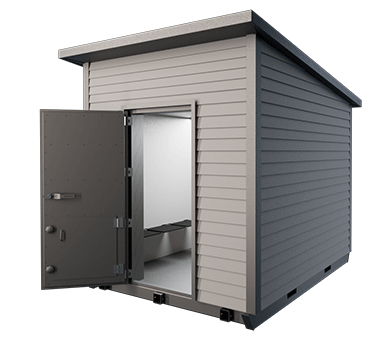
A neighborhood that does everything in this guide still faces fires that start somewhere else. Wind can carry a fire from 20 miles away into a well-prepared community in a few hours. Evacuation is always the safest choice, and leaving early on the first warning is the plan for every household.
Sometimes roads close or fire moves faster than a safe departure allows. The FORT is an above-ground, on-site refuge for that situation, designed to work alongside evacuation planning and home hardening. Its construction materials were exposed to sustained temperatures up to 2,000°F in fire endurance testing, and its air system kept oxygen and carbon dioxide in safe ranges for up to 8 occupants over 4 hours. The full results are on our safety and testing page.
The FORT is also a secure place for things you can't replace. Family documents, photo albums, backup hard drives and heirlooms go inside before you leave, and they stay protected even if the house burns. Packing them is one less task standing between your family and an early departure.
Frequently Asked Questions
Fire prevention is the work of stopping fires before they start, mostly by controlling the human activities that cause them. People start about 85% of US wildfires with a known cause, through debris burning, equipment sparks, vehicles, power lines and other sources. Burning only on permitted days, maintaining equipment and clearing dry vegetation near homes are the most effective steps. Learn more about what causes wildfires.
A neighborhood becomes a Firewise USA site by forming a volunteer committee, completing a wildfire risk assessment with a local expert, writing a 3-year action plan and logging at least 1 volunteer hour per home each year in risk-reduction work. Sites must have between 8 and 2,500 dwelling units and renew every year. The process usually takes 6 months to a year. NFPA lists the full Firewise USA recognition requirements.
Living in a Firewise USA site in good standing qualifies California homeowners for an insurance discount under the state's "Safer from Wildfires" regulations. The discount can take up to 6 months to appear, because NFPA updates its site boundary data in March and October and insurers receive it through data providers. See NFPA's notice for California residents.
On a Red Flag Warning day, avoid any activity that can make a spark: mowing, grinding, welding, outdoor burning and towing with loose chains. Park on pavement or gravel, keep your vehicle fueled or charged and have go-bags ready so you can leave early. Our guide on what to do when a Red Flag Warning is issued has the full checklist.
A home fire shelter can't replace wildfire prevention or evacuation. It's one layer of a wildfire plan built on both, and evacuating early is always the safest choice. The FORT is an on-site refuge designed for the moment when leaving is no longer possible, and its air system was tested for up to 8 occupants over 4 hours.
Key Takeaways
- People start about 85% of US wildfires with a known cause.
- Debris burning is the top human cause; burn only on permitted days.
- Firewise USA recognition takes 6 to 12 months and needs 8 to 2,500 homes.
- California Firewise sites qualify for home insurance discounts.
- Mow before 10 a.m., and only on green lawn.
- On Red Flag days, pause spark-producing work and get ready to leave.
- Evacuate on the first warning; don't wait for an order.
Final Thoughts
Neighbors who organize stop fires that would otherwise start on their own street. A Firewise committee, a shared burn calendar, a group text for Red Flag days and an agreement to mow before 10 a.m. are small habits. Together, they address the most common human causes of wildfires near homes.
Prevention works alongside a household plan built on leaving early. For the rare moment when leaving isn't possible, learn how the FORT fits into a layered wildfire protection plan, and explore our wildfire prevention resources for more ways to get started.